
Ingredients for Ramadan Pide (Turkish Flatbread)
- 1 dessert spoon salt
- 1 dessert spoon granulated sugar
- 1 tea glass (about 100 ml / 1/3 cup + 1 tbsp) lukewarm water
- 2 tablespoons vegetable oil
- 1 water glass (about 200 ml / 3/4 cup + 1 tbsp) lukewarm milk
- 1 packet instant yeast
- 4 water glasses (about 200 ml / 3/4 cup + 1 tbsp each) flour
- For the topping:
- 1 egg yolk
- 1 tablespoon yogurt
- 2 tablespoons vegetable oil
- Nigella seeds
- 2 tablespoons cornmeal
How to Make Ramadan Pide (Turkish Flatbread)
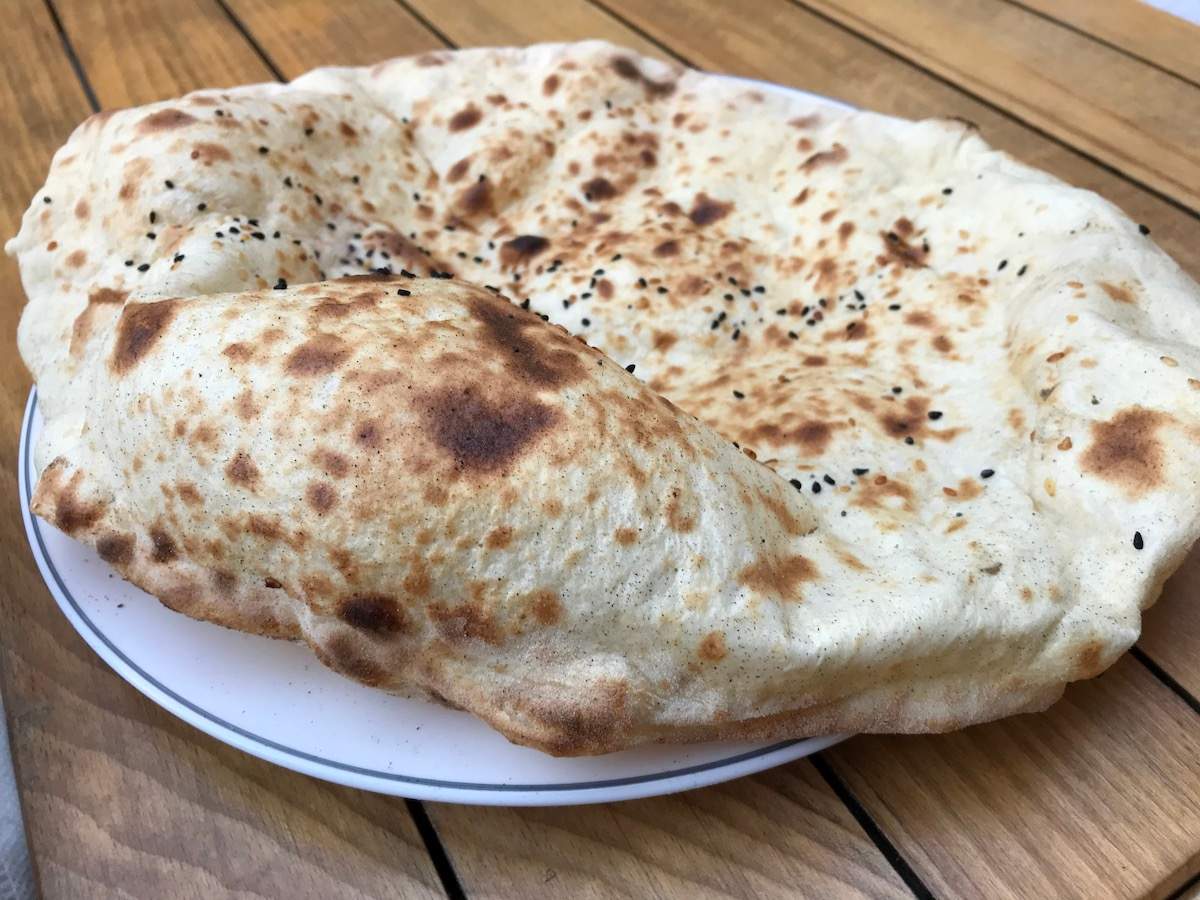
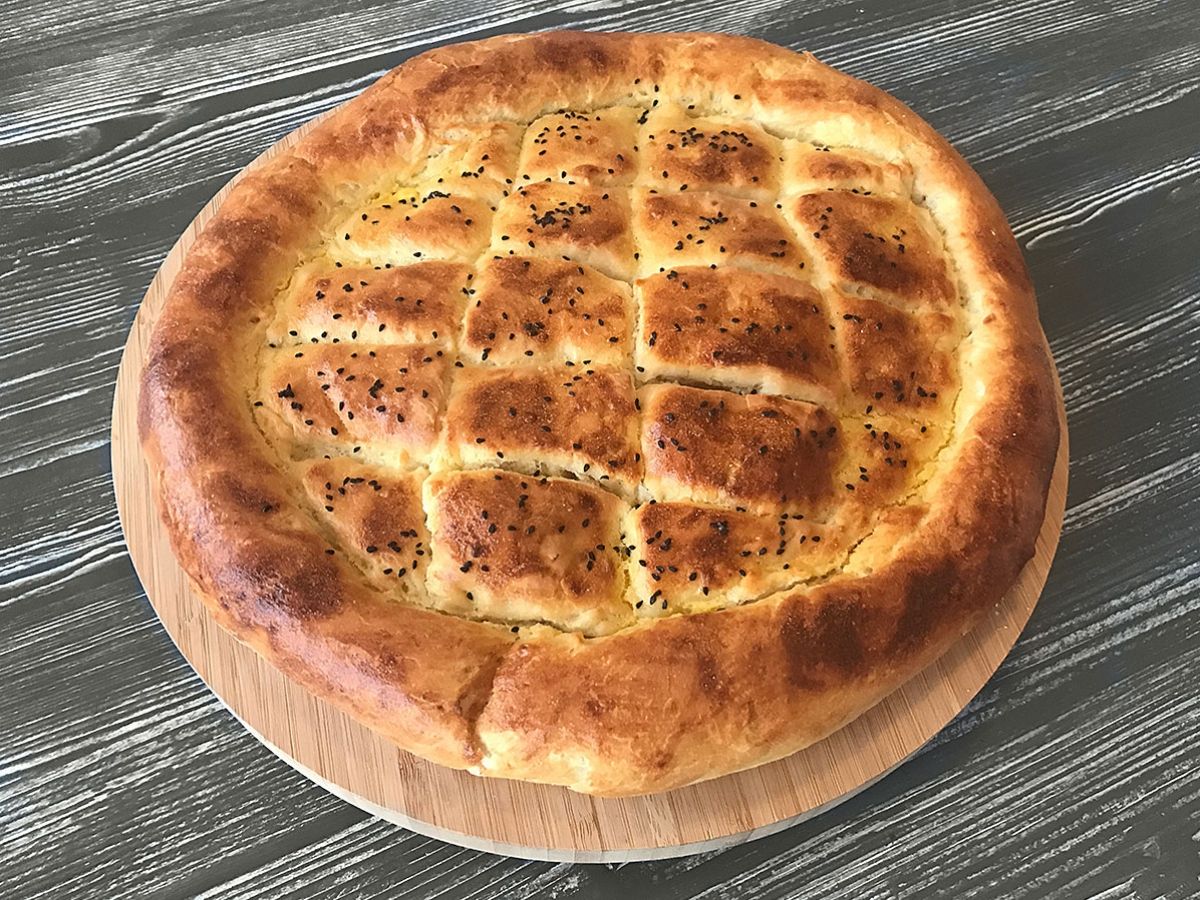
In a mixing bowl, combine 1 packet of instant yeast, 1 tea glass (about 100 ml / 1/3 cup + 1 tbsp) of lukewarm water, and 1 dessert spoon of granulated sugar, then stir. Cover and let rest for 5 minutes. Then add 1 water glass (about 200 ml / 3/4 cup + 1 tbsp) of milk, 2 tablespoons of vegetable oil, and 1 dessert spoon of salt, and mix. Add 4 water glasses of flour and knead the dough. Transfer the dough to a glass bowl, cover with plastic wrap, and let it rest for half an hour. Grease your hands with vegetable oil, take the rested dough, and knead it a little more. Line a baking tray with parchment paper and sprinkle 2 tablespoons of cornmeal over it. Shape the dough into a round, place it in the center of the tray, and spread it out by dipping your hands in oil to form a large circle (pressing with your fingers). Using a knife, score a circle around the edge leaving a two-finger-width border. Score the center in a diamond (baklava) pattern with the knife, then cover with a cloth and let it rest for about 20 minutes.
In a bowl, whisk together 1 egg yolk, 2 tablespoons of vegetable oil, and 1 tablespoon of yogurt. Brush this mixture over the rested dough. Use a fork to redefine the scored lines. Sprinkle nigella seeds on top. Bake in a preheated oven at 200°C (390°F) until golden brown on both top and bottom.
About This Recipe
Evliya Çelebi recorded the bread-maker tradesmen of his era in his notes as 999 shops and 10,000 workers. He noted that the finest Francala bread was made in the bakeries of Galata and Tophane.
The bread of the Ottoman Janissaries was baked in a large bakery located across from the Şehzade Mosque, between the Janissary barracks and the Acemi Oğlanları barracks. This bread was called "tavın." Dark in color, flavorful, and quite filling, it was known among the people as "fodla." According to Evliya Çelebi, 300 workers labored in this bakery. Those who supplied bread to the military were called Ekmekçibaşı until 1863. In the Ottoman palace, palace bread was referred to as "has bread" and was baked in ovens called "has fırın." The bread consumed by the general public at that time was called "harcı."
The word "pide," meaning flat bread, derives from "fodula." Widely consumed in Istanbul during the 15th and 16th centuries, the word pide corresponds to "pitta" in medieval Greek, with a diminutive form of "pitulla." These flat breads transformed into our pide — an indispensable part of the holy month of Ramadan — toward the end of the 18th century.
When we think of pide, Ramadan is the first thing that comes to mind, though Meat Pide and Kaşar Cheese Pide are never far behind. But today, we've prepared our wonderfully fresh, steaming Ramadan Pide recipe just for you. Bon appétit in advance…