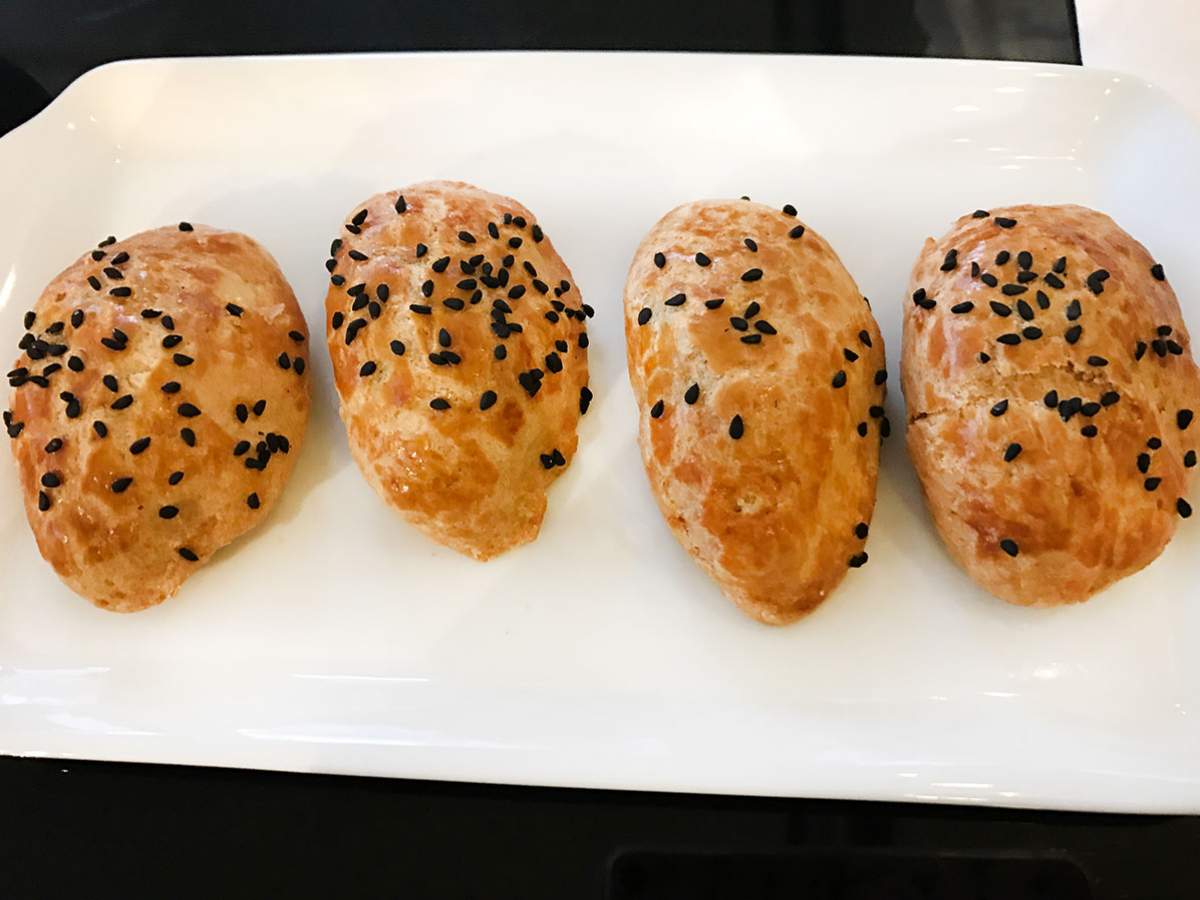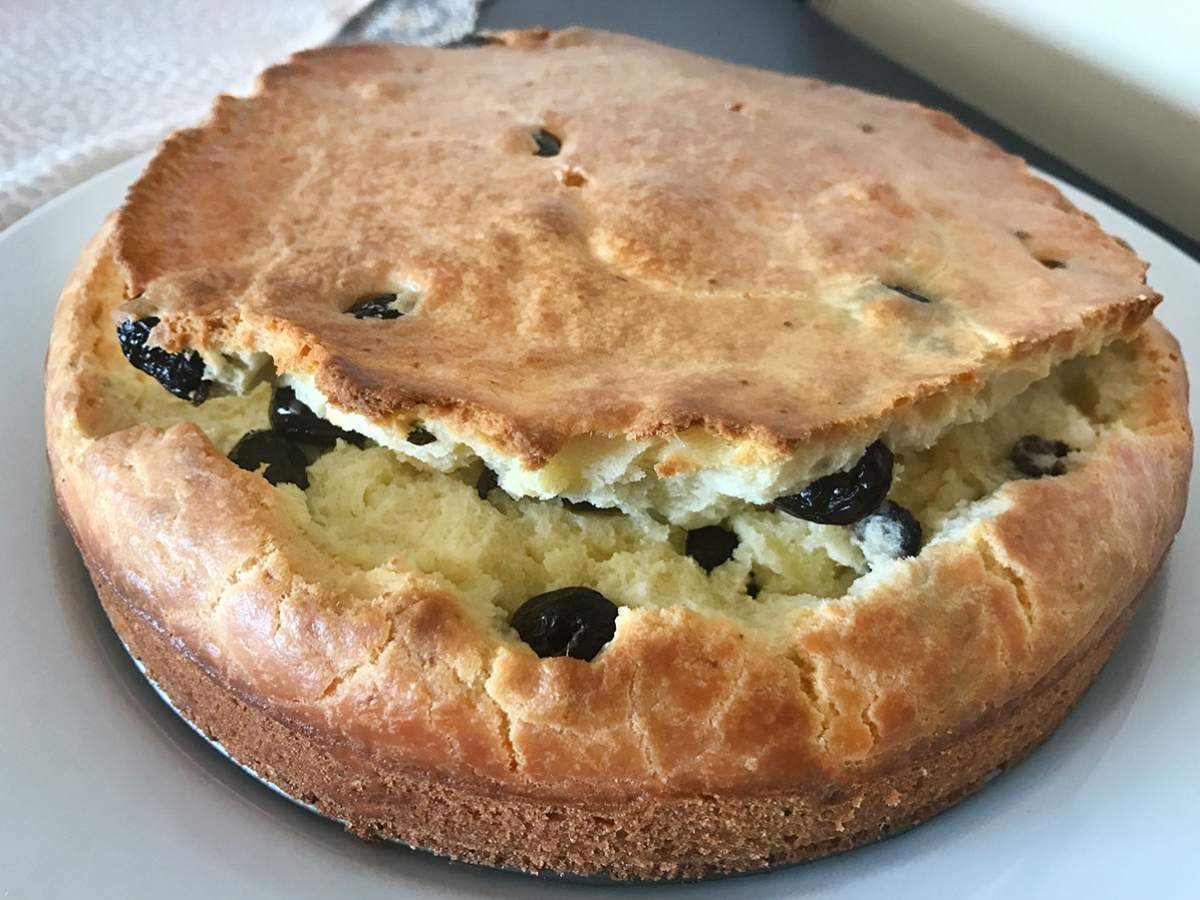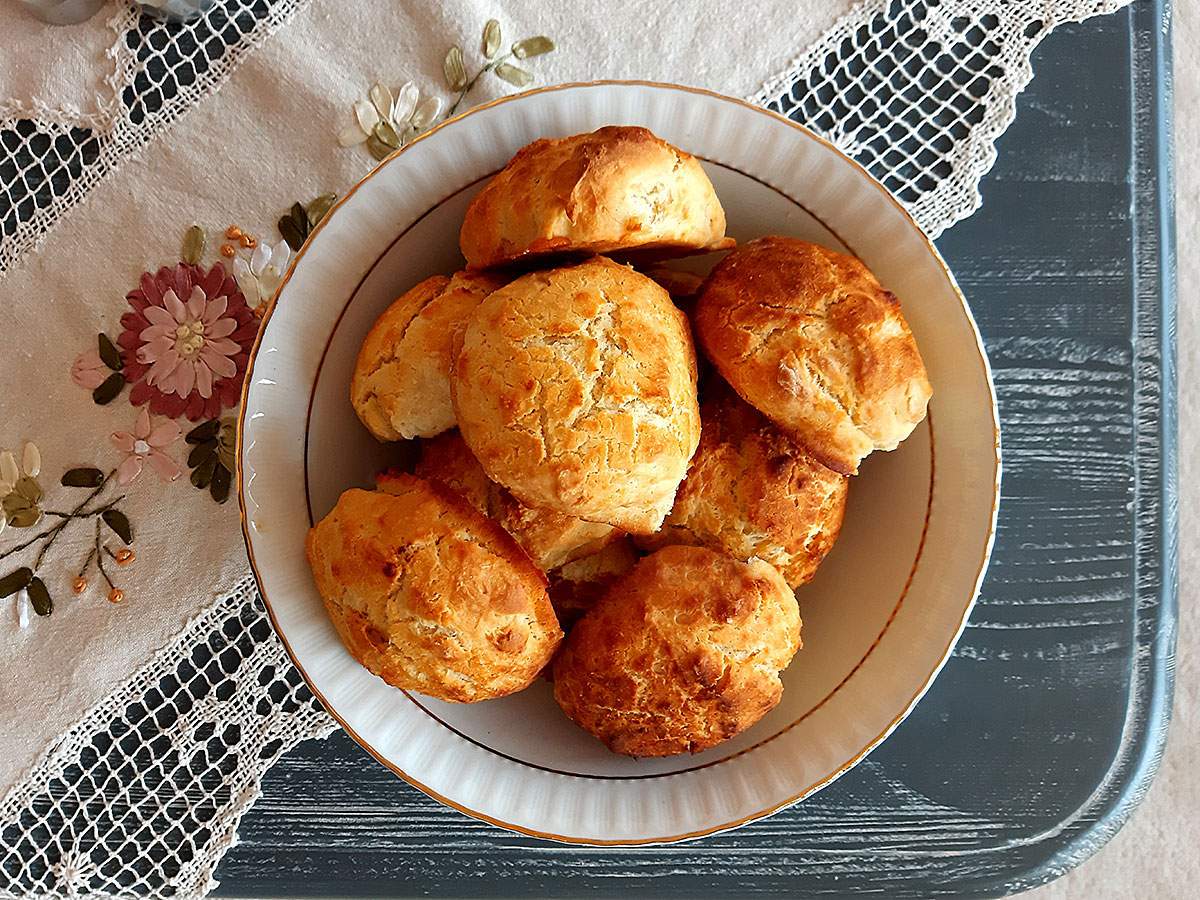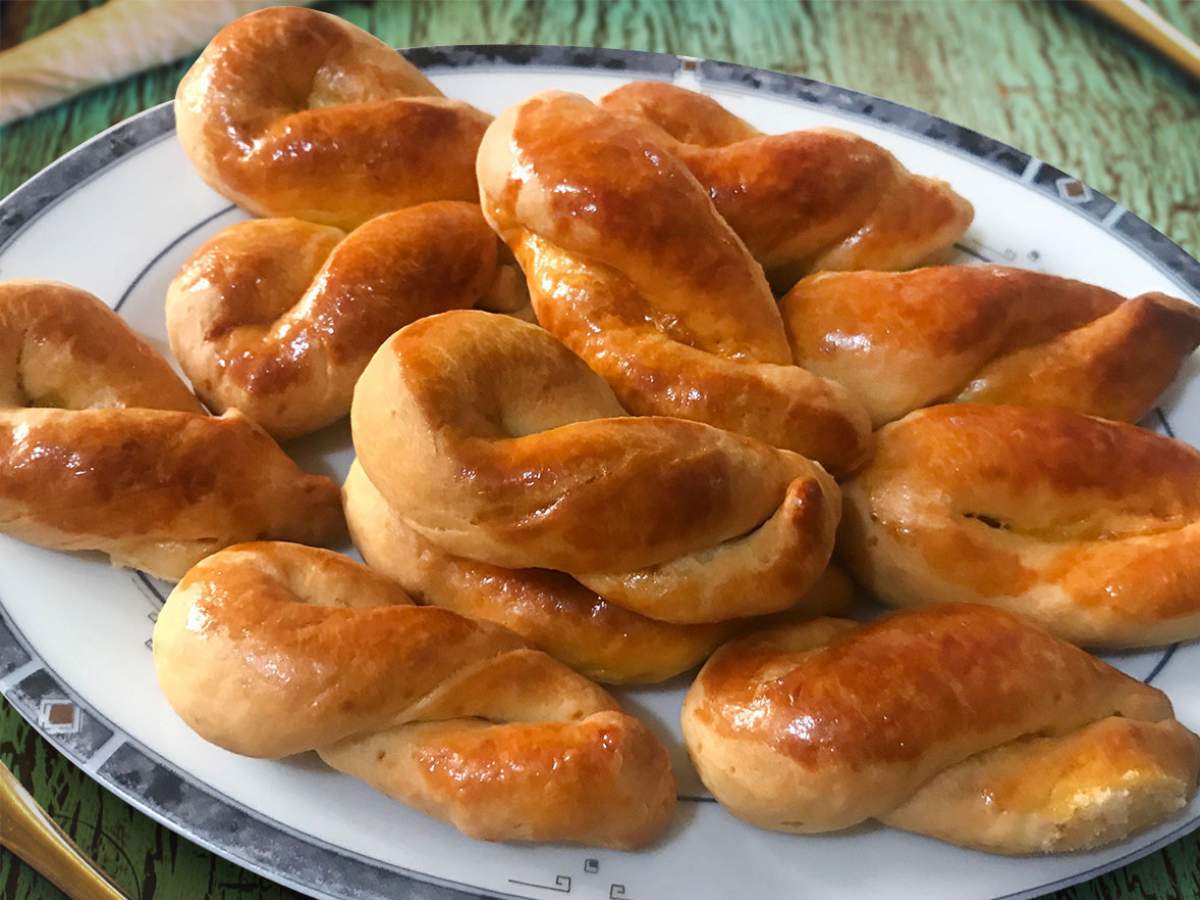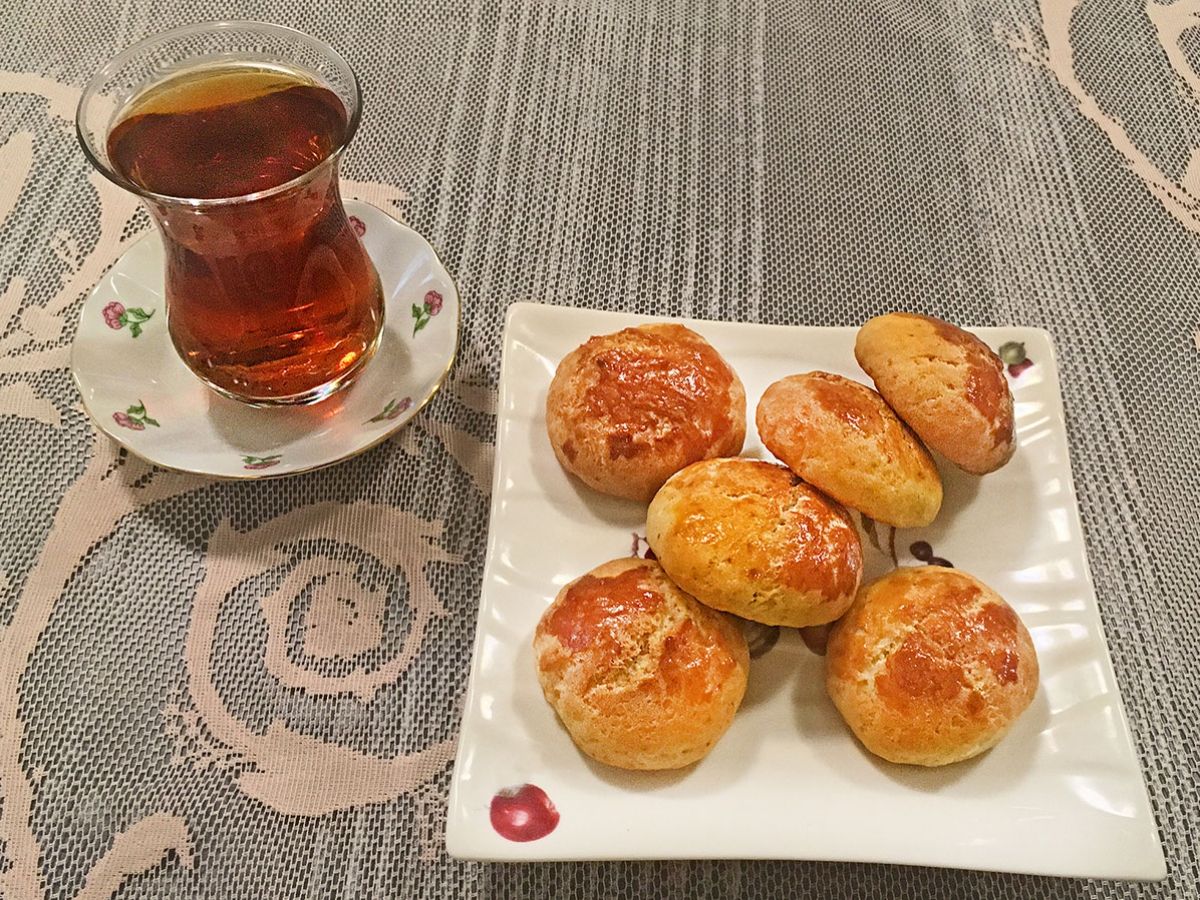

Ingredients for Olive-Filled Fluffy Poğaça (Turkish Soft Rolls)
- 1 water glass (about 200 ml / 3/4 cup + 1 tbsp) yogurt
- 2 eggs
- 2 tea glasses (about 100 ml / 1/3 cup + 1 tbsp each) vegetable oil
- 2 teaspoons baking powder
- 15 olives
- 1 teaspoon Aleppo pepper flakes
- 1 dessert spoon (about 2 tsp) salt
- Flour, as much as needed
How to Make Olive-Filled Fluffy Poğaça (Turkish Soft Rolls)
In a bowl, knead together 1 water glass (about 200 ml / 3/4 cup + 1 tbsp) of yogurt, 1 egg, 1 egg white, 2 tea glasses (about 100 ml / 1/3 cup + 1 tbsp each) of vegetable oil, 1 dessert spoon (about 2 tsp) of salt, 2 teaspoons of baking powder, and as much flour as needed until the dough no longer sticks to your hands. For the filling: finely chop 15 pitted olives, add 1 teaspoon of Aleppo pepper flakes, and mix well. Take small pieces of dough, flatten them in your hand, place some of the olive mixture in the center, gather the edges into a pear shape, and roll into a ball. Brush the tops of the rolls with egg yolk and bake at 200°C (390°F). Enjoy!
About This Recipe
Who was the first person, thousands of years ago, to graft this wild tree in order to obtain more abundant, less bitter, larger, and oilier olives — and to press its fruit for use in everyday life? Science has no definitive answer; only legends remain.
The internationally respected World Olive Encyclopedia states that "olive cultivation began in Anatolia approximately six thousand years ago." It notes that among the peoples who lived in this region in ancient times, only the Assyrians and Babylonians had no knowledge of olive growing. The thesis put forward is that the first people to domesticate the olive were those living in the arc where Syria and Iran meet — in the cradle of civilization known as the Near East — the same region where many fruit trees such as grapes, figs, pomegranates, and dates were first cultivated. Persians, Mesopotamians, Syrians, and Palestinians. The oldest remains related to olive cultivation in the Near East, found in Israel and Jordan and dating back to the Chalcolithic period (3700–3200 BC), further support this thesis. During that era, these peoples, with their aptitude and skill in agriculture and trade, grafted wild olive trees to produce a cultivated plant with denser foliage and higher oil yield. They propagated it and spread it first along the Mediterranean coast and then to other regions. Although the olive was transformed into a cultivated crop around 4000 BC, it took approximately another 1,500 to 2,000 years for its fruit to be pressed, its oil extracted, and olive oil to become widespread.
We headed into the kitchen to bring you our Olive-Filled Fluffy Poğaça recipe. You should also try our Sandwich Poğaça recipe sometime — trust us on this one. Happy cooking!