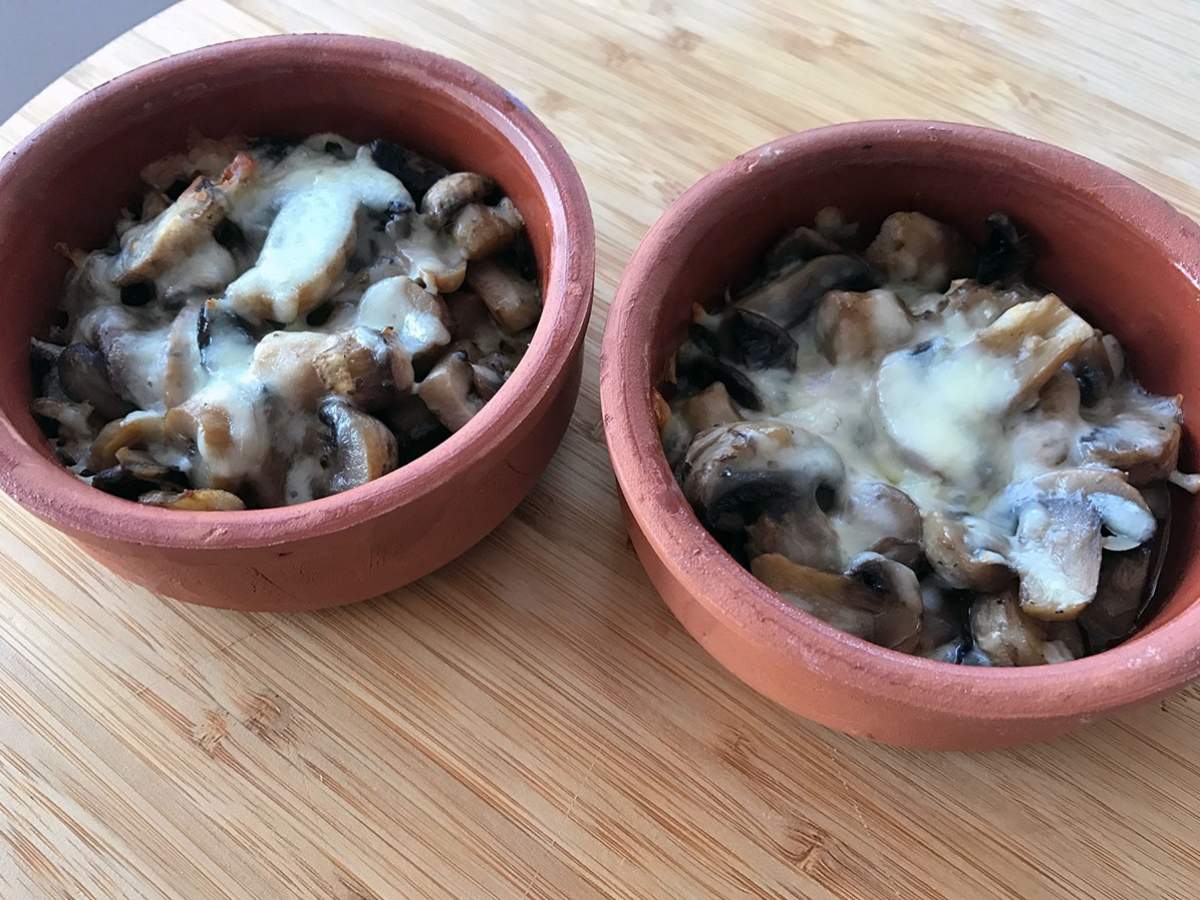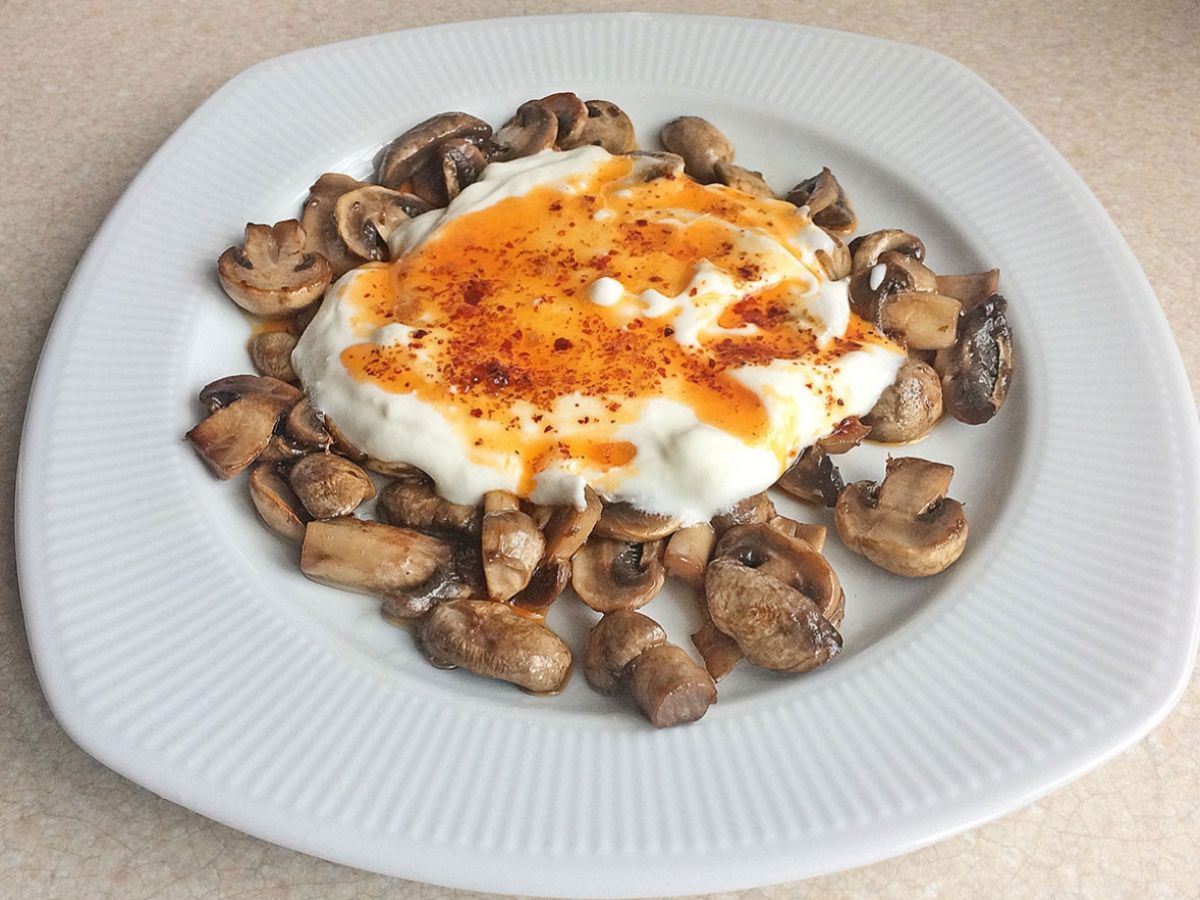

Ingredients for Mushroom Mantı (Turkish Dumplings)
- 1 package cultivated mushrooms
- 1 dessert spoon (about 2 tsp) salt
- 1 tablespoon butter
- 1 tablespoon vegetable oil
- ½ dessert spoon (about 1 tsp) Aleppo pepper flakes
- 1 clove garlic
- 1 bowl yogurt
How to Make Mushroom Mantı (Turkish Dumplings)
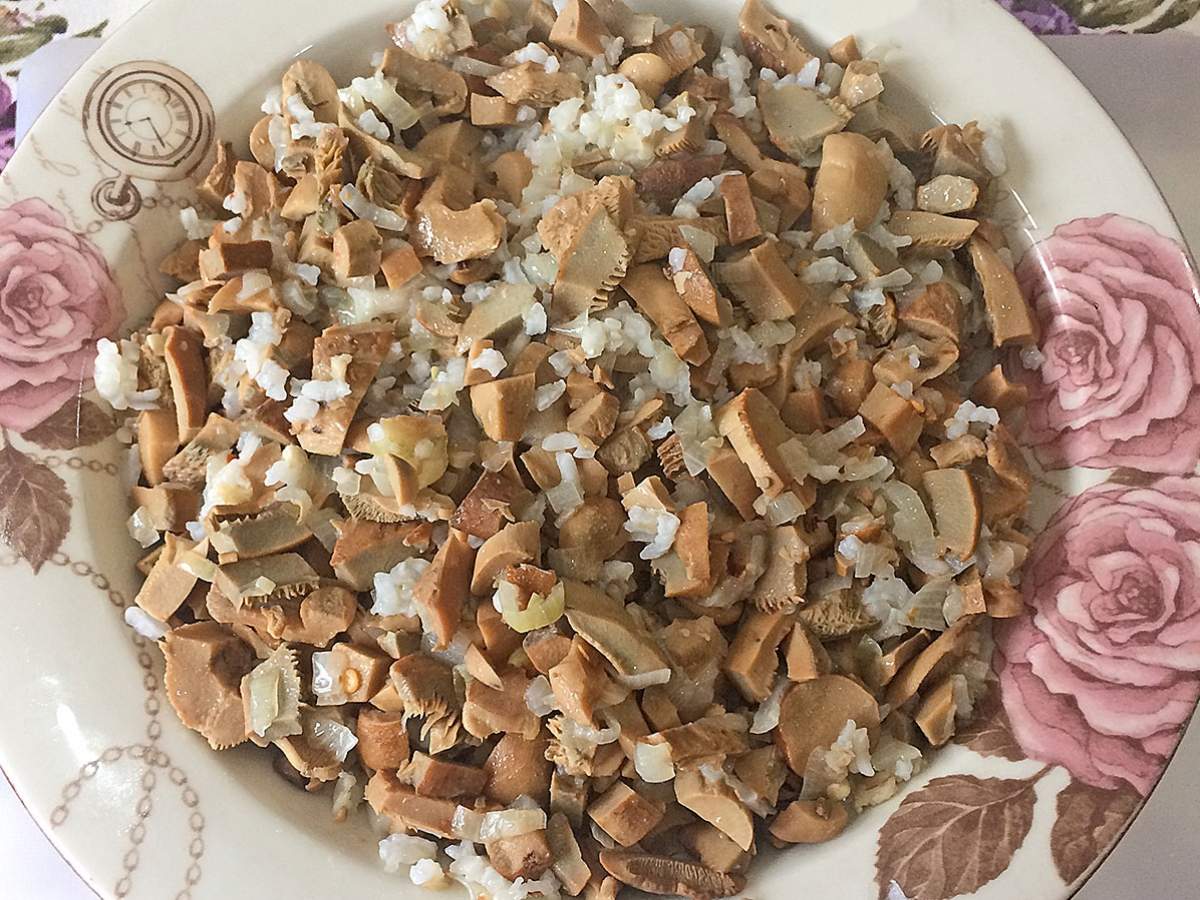
- Place 1 package of washed and julienned cultivated mushrooms into a pot, add water until they are just covered, and add 1 dessert spoon (about 2 tsp) of salt. Boil for 10 minutes, drain, and transfer to a serving plate.
- In a pan, add 1 tablespoon of butter, 1 tablespoon of vegetable oil, and ½ dessert spoon (about 1 tsp) of Aleppo pepper flakes, heat briefly until sizzling, then remove from the heat.
- Crush 1 clove of garlic into a bowl of yogurt and mix well.
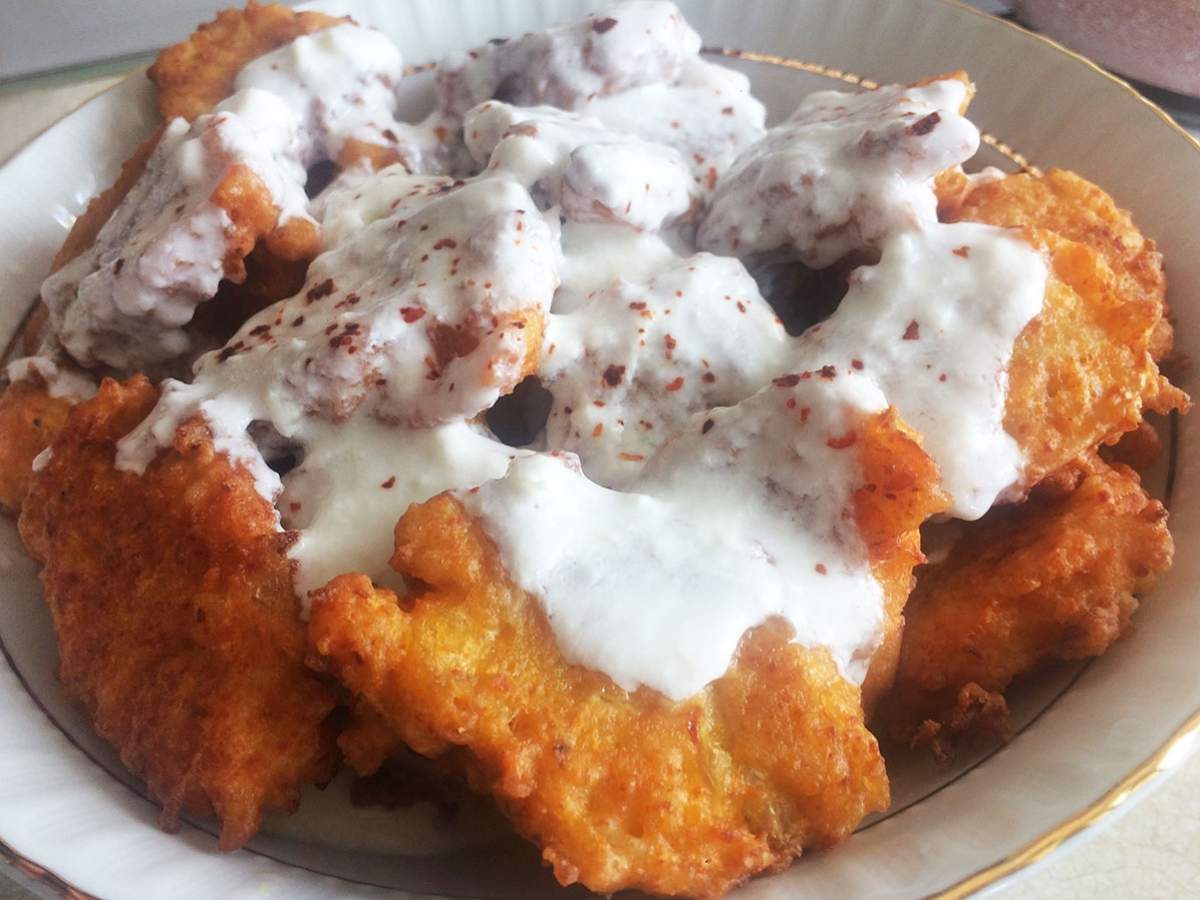
- Place the mushrooms on the serving plate, pour the yogurt over the top, and drizzle the butter mixture over everything.
Cooking Tip
You can also add mint if you like.About This Recipe
Mushrooms occupy their own kingdom — known as fungi — sitting between the animal and plant kingdoms. Scientists today are able to identify up to 1,000,000 species of mushrooms. Of these, 850,000 species are smaller than 2 mm, while the remaining 150,000 species are larger than 2 mm. Although the majority live in tropical regions, around 10,000 species exist in our country. In other words, we are a nation rich in mushrooms and their varieties. We said our country is a mushroom paradise, but only around 40 of those are edible species. Of these 40 varieties, 25 are exported, while only 3 to 5 varieties end up on supermarket shelves.
Mushrooms also play important roles in ecosystems by breaking down dead organisms, dead leaves, branches, and trees. If mushrooms did not exist, the world's vegetation would very quickly become buried under non-decomposing waste and would naturally perish.
Parasitic species of mushrooms draw their nutrients from living organisms, often causing their death. They kill weak, old, wounded, and diseased plants, making room for young and healthy ones. Another group of mushrooms gives vitamins, minerals, antibiotics, and nitrogen compounds to the plants they live alongside, in exchange for sugars and other carbon-based substances. These mushrooms grow at the base of certain trees. Their disappearance can mean the death of the trees they coexist with — and sometimes the reverse is also true.
Mushrooms contain abundant antioxidants that are used in the prevention or treatment of many diseases. It is possible to consume probiotics — beneficial bacteria for the digestive system — naturally through certain foods, and mushrooms are among the richest sources of probiotics. Additionally, in 2006 an American company produced packaging material from the mycelium found at the root of mushrooms. These packages are both eco-friendly and recyclable.
If Carrot Mantı is possible, why not Mushroom Mantı? Well then, here is our recipe. Enjoy!