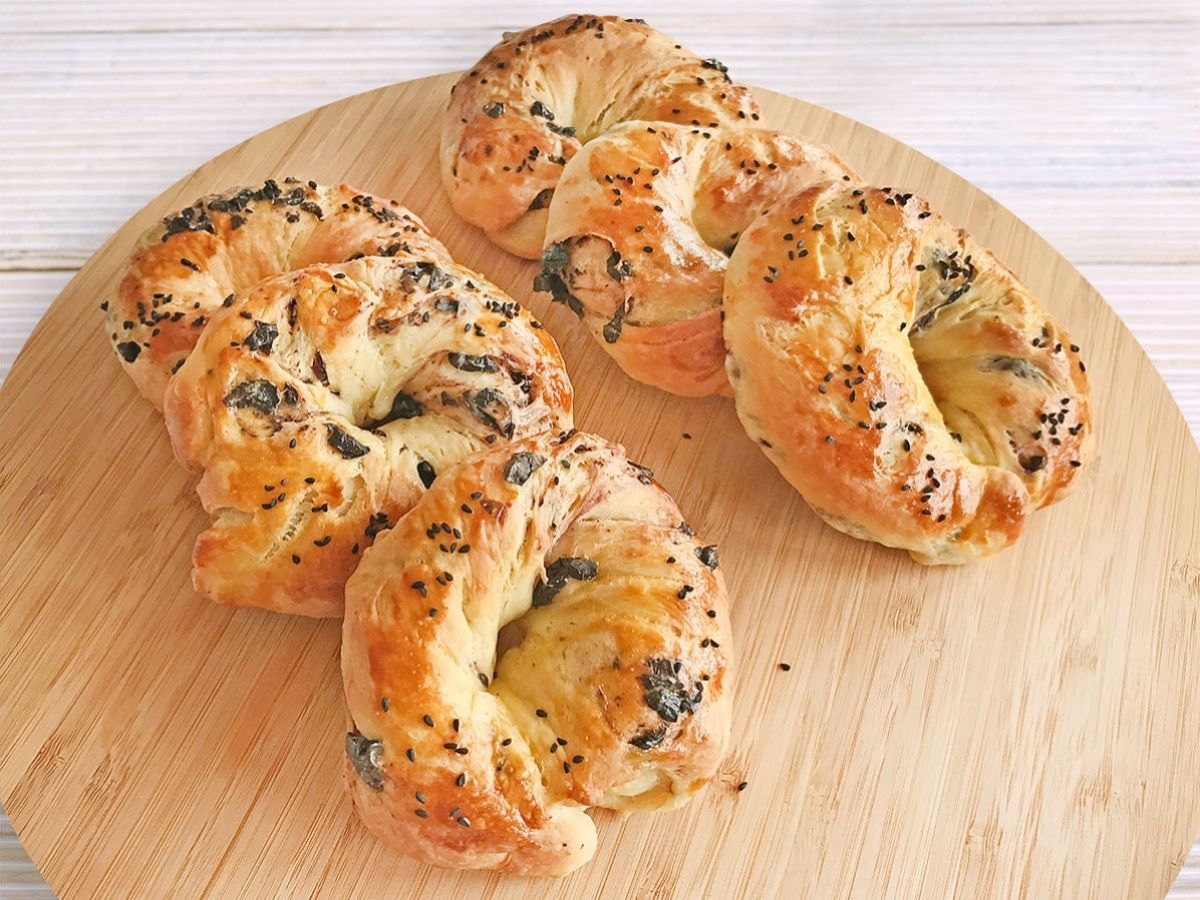

Ingredients for Olive Açma (Turkish Olive-Stuffed Bread Rings)
- 1.5 water glasses (about 1 1/2 cups) olives
- 4 water glasses (about 3 cups + 4 tbsp) flour
- 1 dessert spoon (about 2 tsp) salt
- 1 tablespoon granulated sugar
- 1 dessert spoon (about 2 tsp) mahlep (mahlab)
- 1 packet dry yeast
- 1 coffee cup (about 1/3 cup) vegetable oil
- 2 water glasses (about 1 3/4 cups) milk
- For the topping:
- 1 tablespoon vegetable oil
- 1 egg yolk
- Nigella seeds
How to Make Olive Açma (Turkish Olive-Stuffed Bread Rings)
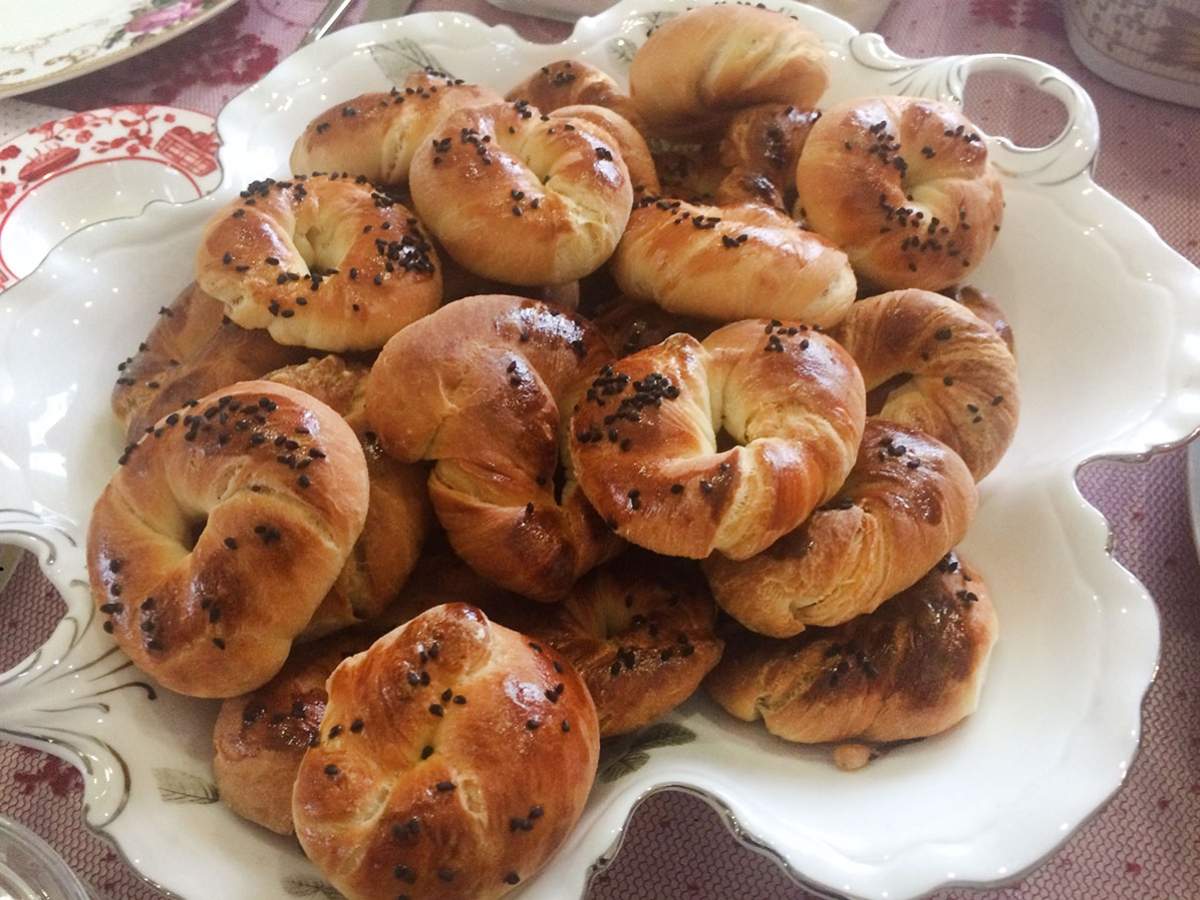
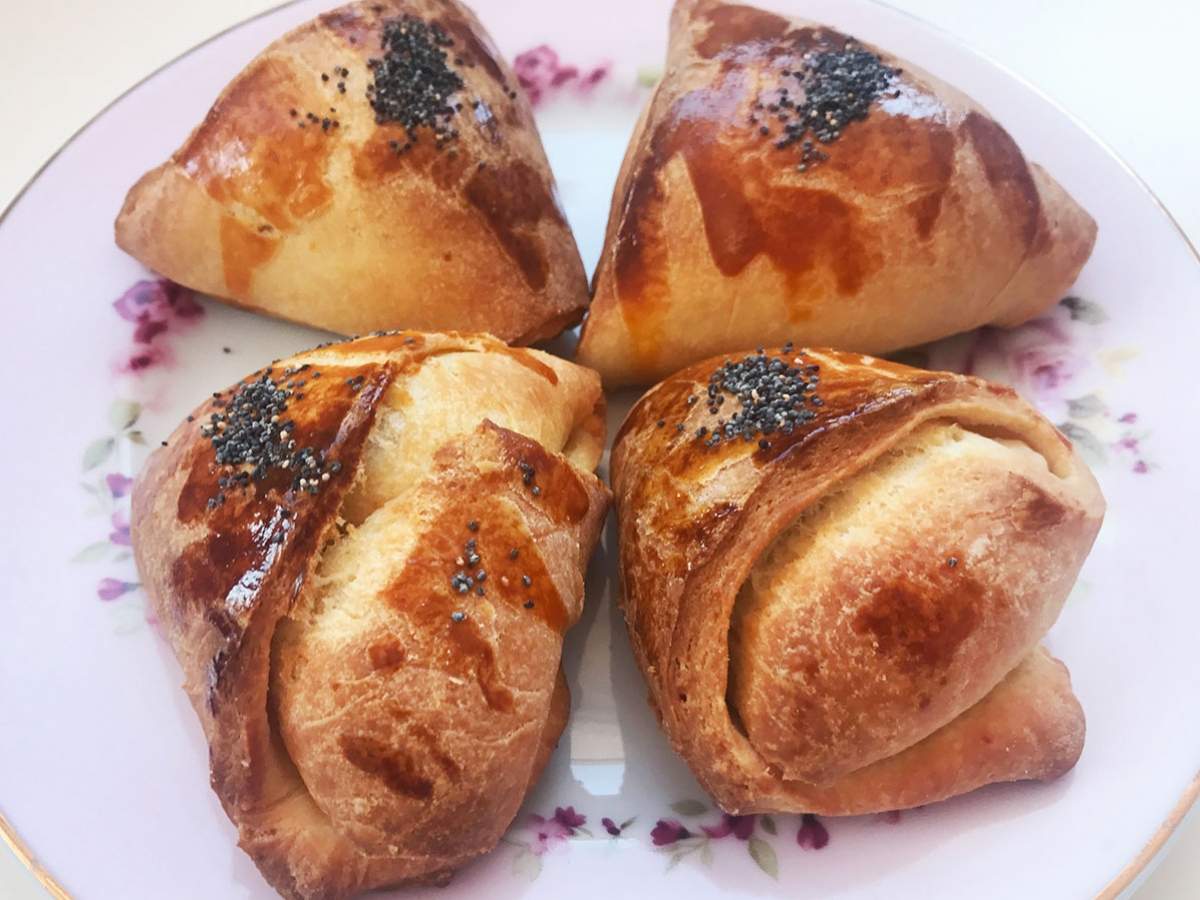
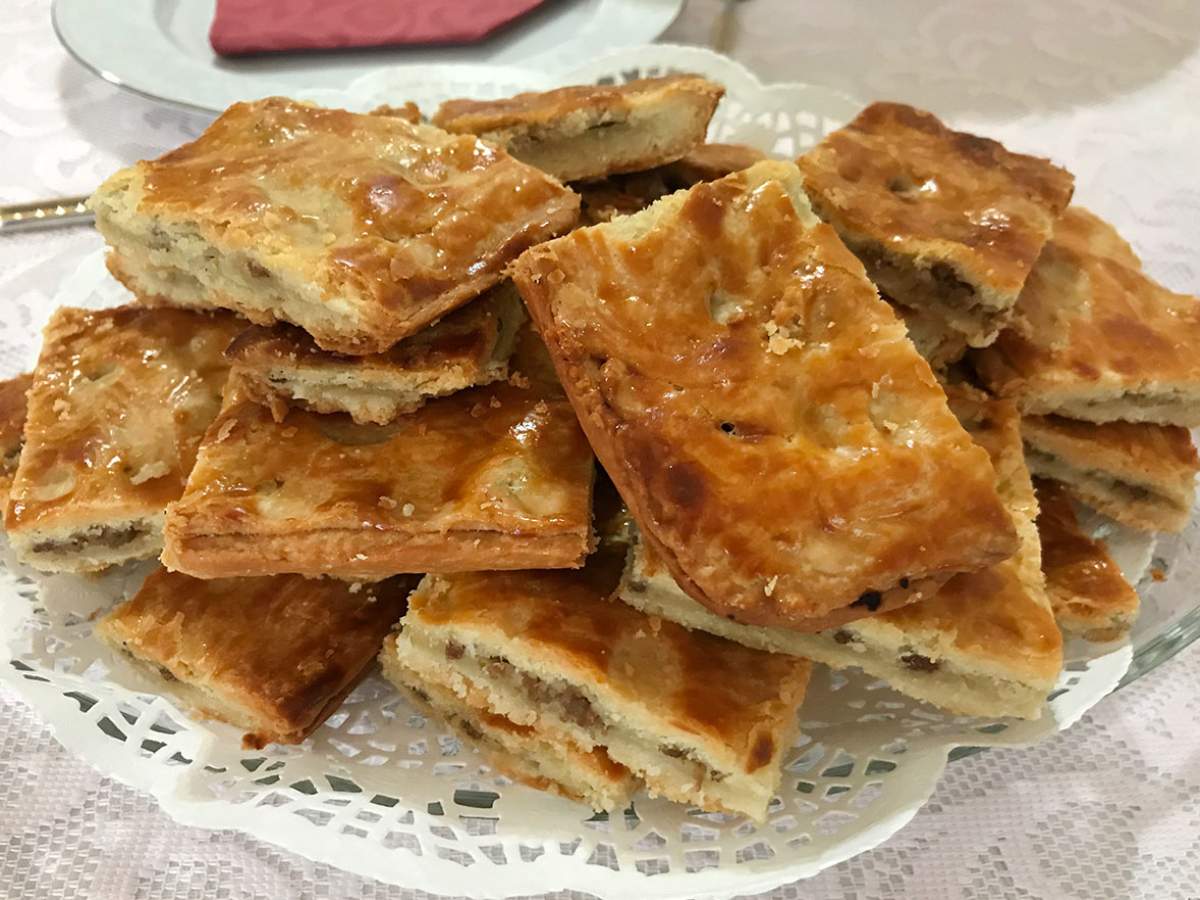
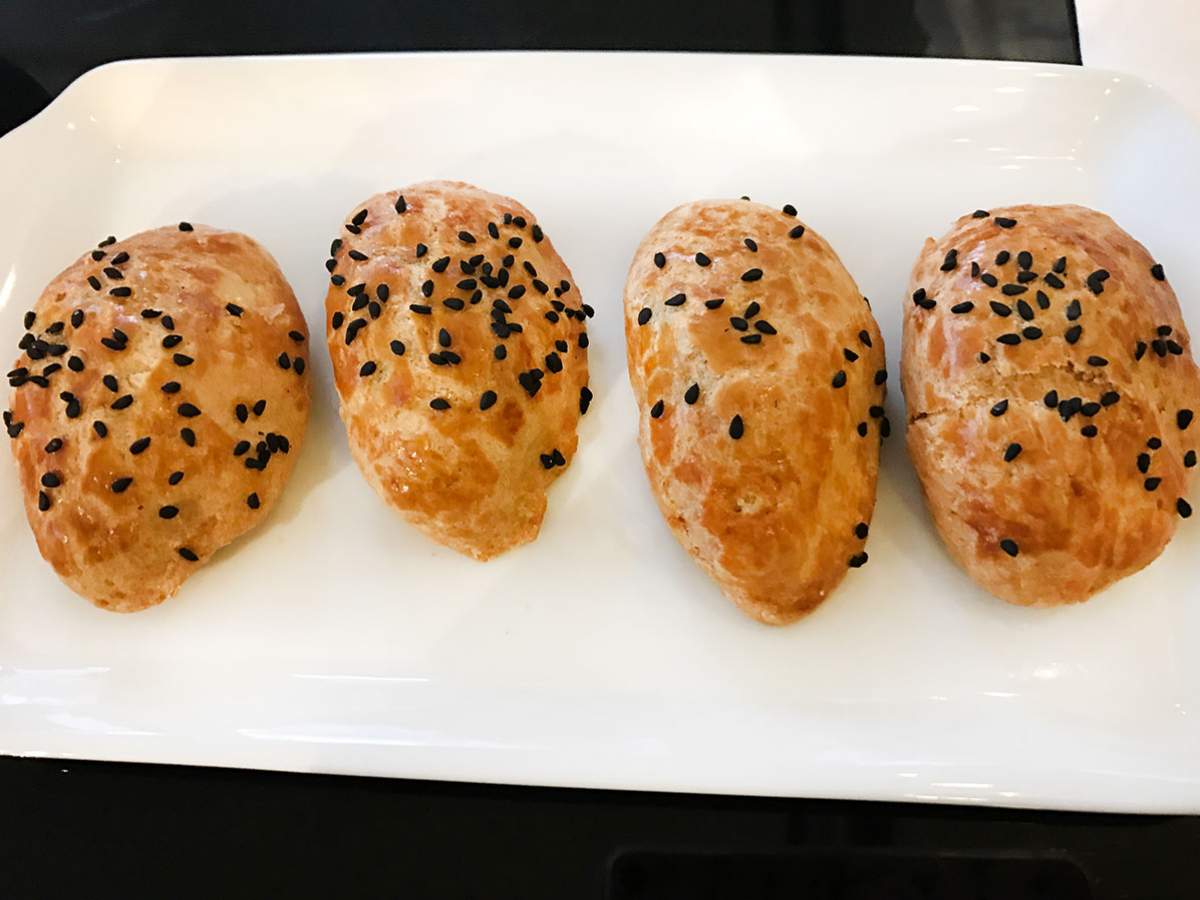
Remove the pits from 1.5 water glasses (about 1 1/2 cups) of olives and process them in a food processor. In a large bowl, add 4 water glasses (about 3 cups + 4 tbsp) of flour, 1 dessert spoon of salt, 1 tablespoon of sugar, 1 dessert spoon of mahlep, and 1 packet of dry yeast, and mix everything together. Make a well in the center and pour in 1 coffee cup (about 1/3 cup) of vegetable oil along with 2 water glasses (about 1 3/4 cups) of milk. Then fold in from the edges and knead well. Continue kneading until you get a smooth, soft dough. Transfer to a large, deep glass bowl and let rest for about one hour. Then divide the dough on the counter into 10 pieces. Roll out each piece using a rolling pin. After rolling out the first piece, spread a portion of half a packet of melted margarine over it. Spread the olives on top as well, then place two pieces on top of each other and loosely roll them into a slightly elongated log, then cut in half down the middle. Twist each piece around the other. Then pull gently from both ends to stretch slightly. Roll the piece into a ring to form your açma. Complete all the pieces this way. You can also shape them however is easiest for you. Arrange the ring-shaped açma on a baking tray lined with parchment paper. Generously brush with the egg yolk mixed with vegetable oil, and sprinkle with nigella seeds. Let them rest on the tray for about 10 minutes, then bake in a preheated oven at 200°C (390°F) until the tops are golden brown.
About This Recipe
Olive trees can live up to 1,000 years. In fact, some researchers report that olive trees as old as 3,000 years have been found. The long life of the olive tree is attributed to a compound called oleuropein found in its leaves. This compound protects olive trees from diseases and pests. Additionally, a substance called calcium elenolate, derived from its leaves, destroys harmful viruses, bacteria, and fungi.
The only creature that enables olives to reproduce naturally in the wild is the Common Blackbird (Turdus merula), small black-colored birds. When we discard the pits of the olives we eat into the soil, olive trees cannot grow from those seeds. Olive pits have a woody structure. Blackbirds, which are very fond of the olive fruit, swallow the fruits whole and digest the fleshy parts in their crop. They cannot digest the woody olive pits, and so they expel them through their droppings. Olive pits that have passed through the blackbird's crop can germinate once they fall to the ground.
We absolutely love our Olive Tombik Poğaça recipe, and today we decided to make açma. We've prepared this wonderful Olive Açma recipe just for you. Enjoy making it…