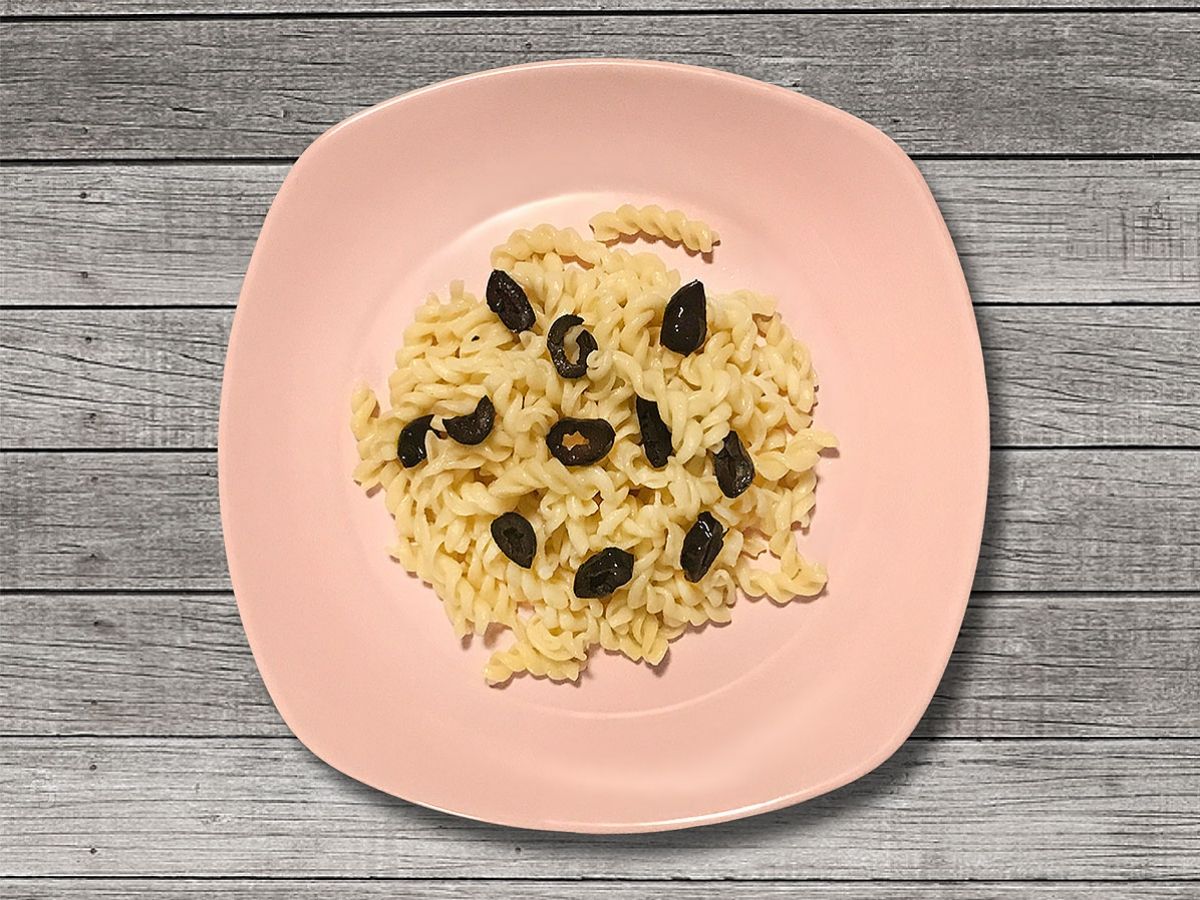

Ingredients for Olive Pasta (Zeytinli Makarna)
- 1 package fusilli pasta
- 1 tea glass (about 100 ml / 1/3 cup + 1 tbsp) vegetable oil
- 2 tablespoons butter
- Black olives, to taste
How to Make Olive Pasta (Zeytinli Makarna)
Boil and drain 1 package of fusilli pasta. Melt 1 tea glass (about 100 ml / 1/3 cup + 1 tbsp) of vegetable oil and 2 tablespoons of butter in a pot, add the pasta, sprinkle with salt, and toss to combine. When serving, chop as many olives as you like on top. (You can use either black olives or green olives.)
Cooking Tip
You can use either black olives or green olives.
About This Recipe
Olives and Mythology
Adam and Eve were expelled from the Garden of Eden. When Adam felt he was about to die at the age of 930, he decided to ask God to forgive him and all of humanity, and tasked his son Seth with this mission. He sent Seth to the garden of paradise. There, an angel gave Seth three seeds from the "tree of good and evil" and told him to place them in his father's mouth before burying him. Adam soon passed away and was buried on Mount Tabor. Three trees grew from where he was buried: the Olive, the Cedar, and the Cypress. In this way, peace was made between God and humankind.
The first law protecting the olive tree was enacted by Solon, a statesman and poet who also laid the foundations of Athenian democracy. By the Hellenistic Period, the olive tree had come to be considered sacred. Those who cut one down were punished either by death or exile.
The staff of Hermes's caduceus — the double-serpent rod that symbolizes medicine — is made from an olive branch. According to legend, the god Hermes thrust his staff into the ground between two fighting serpents to measure his power of reconciliation. From that moment on, the serpents ceased their quarrel, coiled around the staff, and never let go.
When the fury of the Great Flood began to subside, the Prophet Noah wondered whether life had returned to the world. He released a white dove to find out. Unable to find a tree or patch of dry land to perch on, the dove returned to the ark. Noah waited a while longer and released the dove again. This time, it came back carrying a freshly plucked olive branch in its beak. It was through the dove and the olive branch that the end of the Flood was known. The white dove carrying an olive leaf in its beak has since that day become a symbol of hope and peace. And the olive tree — which withstood the devastating power of the Flood — became a symbol of immortality…
Those who visit the Aegean shores of Anatolia today, resting beneath the very olive trees in whose shade Homer once sat, may feel as though they hear the old and wise tree whispering in their ear: "I belong to everyone, and yet to no one. I was here before you arrived, and I will be here long after you are gone."
Today we've prepared our delicious Olive Pasta recipe for you. After all, we can't keep eating Pesto Penne Pasta every day :) Enjoy!