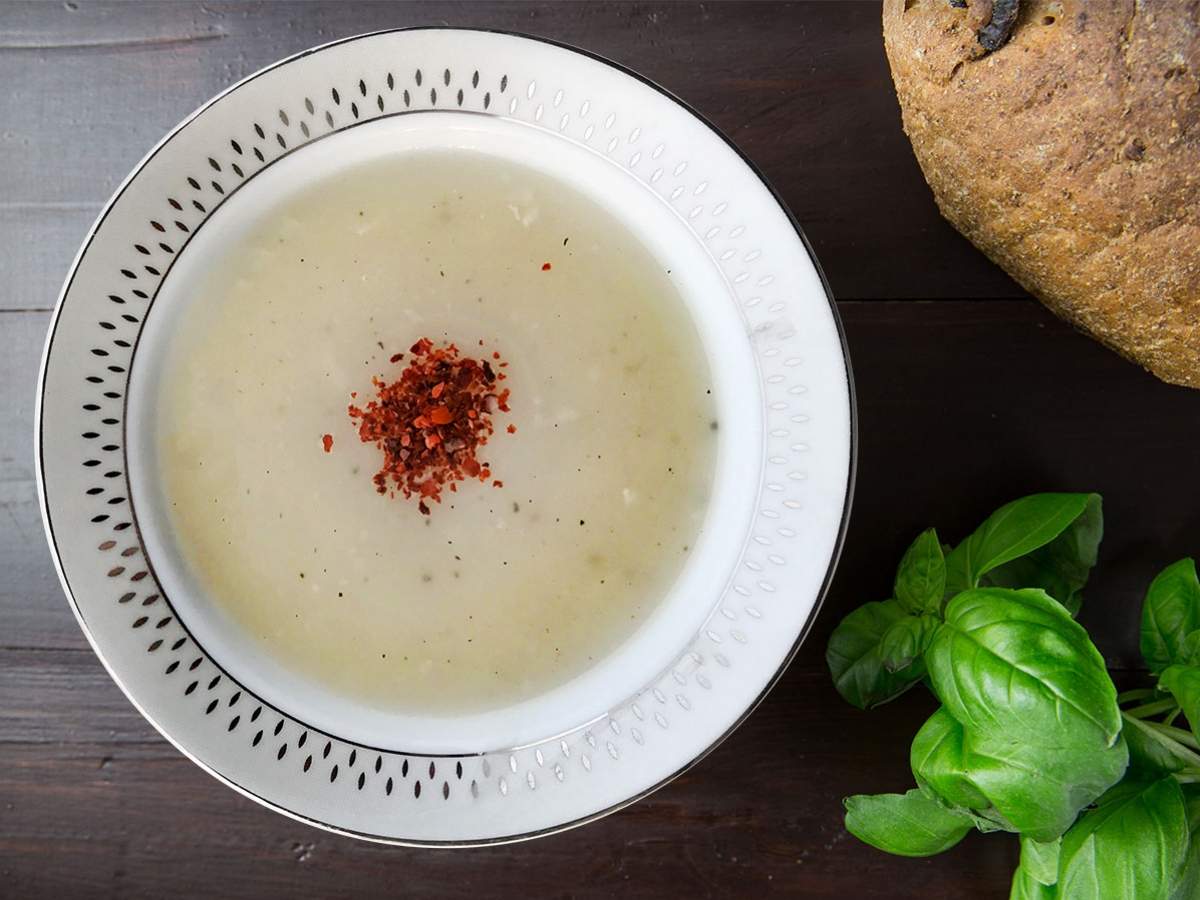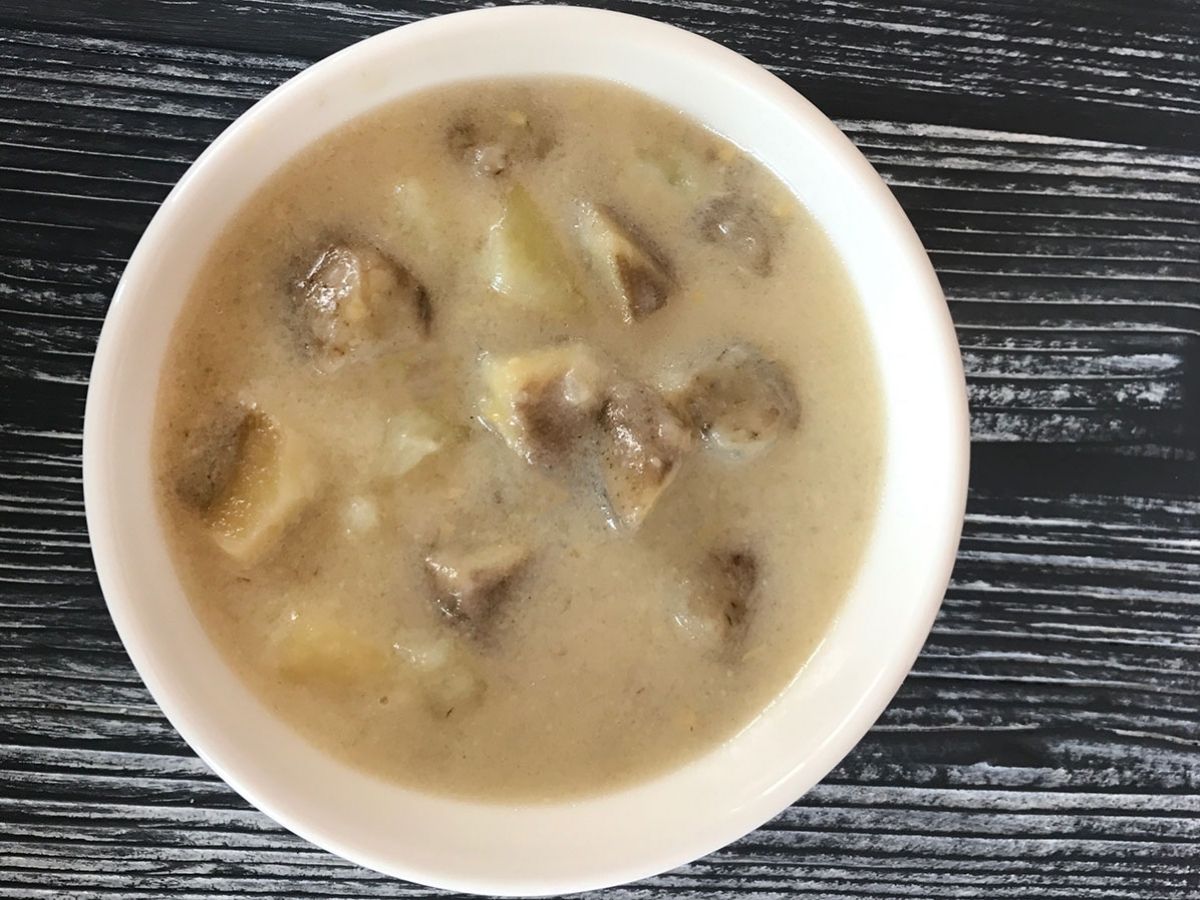

Ingredients for Chunky Artichoke Soup
- 4 artichokes
- 1 tablespoon butter
- 1 tablespoon vegetable oil
- For the tempering mixture:
- 1 tablespoon flour
- 1 egg yolk
- ½ dessert spoon (about 1 tsp) salt
How to Make Chunky Artichoke Soup
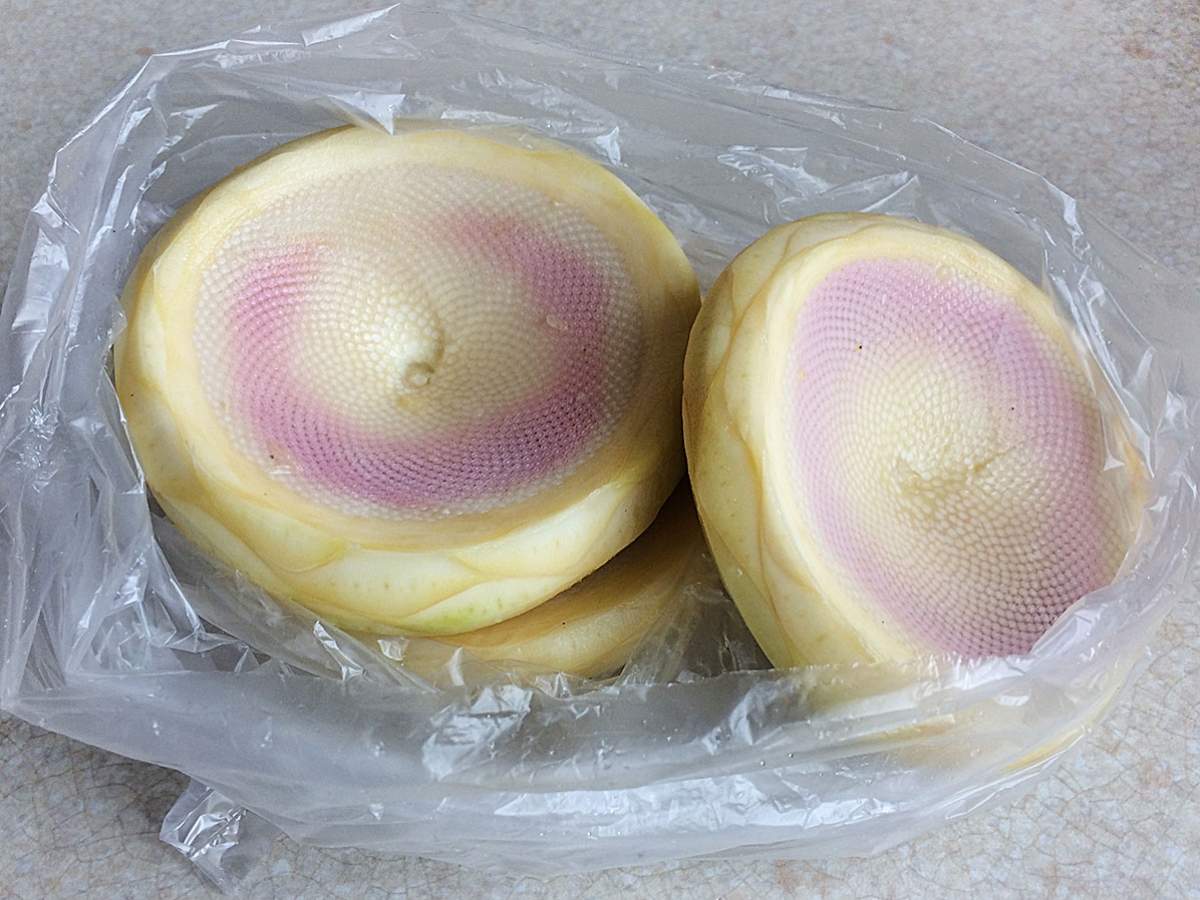
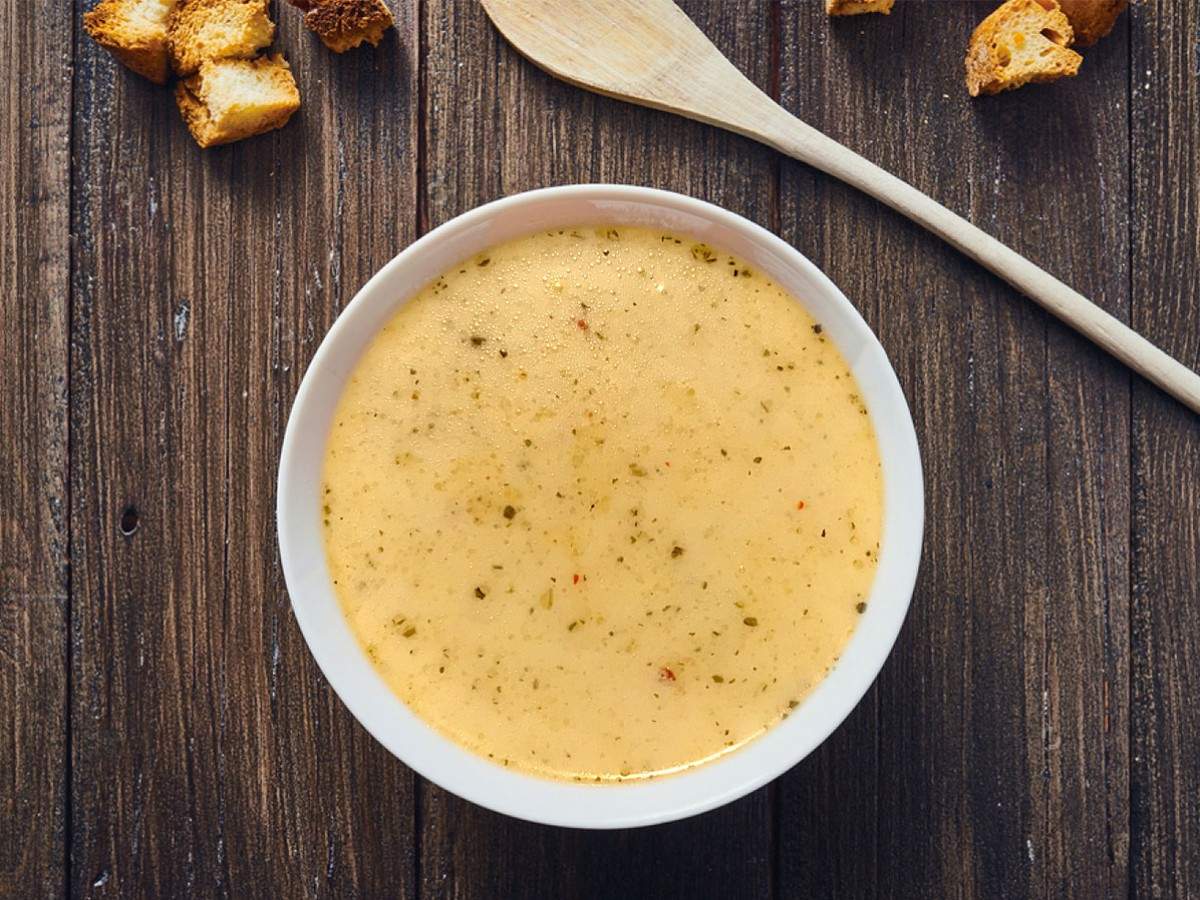
Dice 4 cleaned artichokes into cubes and place them in a pot. Add enough water to cover, along with 1 tablespoon of butter and 1 tablespoon of vegetable oil, and cook until tender.
For the tempering mixture: in a small bowl, mix together 1 tablespoon of flour and 1 egg yolk. Gradually add a ladleful of hot broth from the simmering soup to loosen the mixture. Slowly stir the prepared tempering mixture into the soup pot and cook over low heat, stirring continuously. Add ½ dessert spoon (about 1 tsp) of salt and stir. Enjoy your meal…
About This Recipe
The artichoke is a symbol of abundance. It is the not-yet-ripened flower of the thistle plant.
Its homeland is known to be the Mediterranean, most likely Sicily. One of the oldest known foods in history, the artichoke was regarded as a symbol of fertility in Ancient Egypt. In the 16th century, it was brought to France through the marriage of Italian-born Catherine de' Medici and King Henry, where it became a favorite food among the nobility.
It is said that the artichoke vegetable has undergone changes and been domesticated over the centuries. Wild varieties are still known to grow in North Africa. In our country, two varieties of artichoke stand out: the Sakız variety in the Aegean region and the Bayrampaşa variety in the Marmara region. The Bayrampaşa artichoke is compact and wide, while the Sakız artichoke has an elegant, tall, and slender structure. The Bayrampaşa artichoke has thorny tips, while the Sakız variety is thornless. The leaves of the Sakız artichoke are edible, while those of the Bayrampaşa are not.
To tell whether artichokes are fresh, it is best to see and buy them untrimmed. When you hold an artichoke by its stem and shake it, if the head moves and the leaves look green and fresh, it is young and flavorful. It is also important that the stems are not dried out and remain moist. An artichoke whose head stays stiff when shaken by the stem is overripe and tough — it will likely turn out fibrous. Another useful tip: artichoke stems should be cut just before cooking, because artichokes that are trimmed and left to sit cannot retain their freshness and whiteness for long.