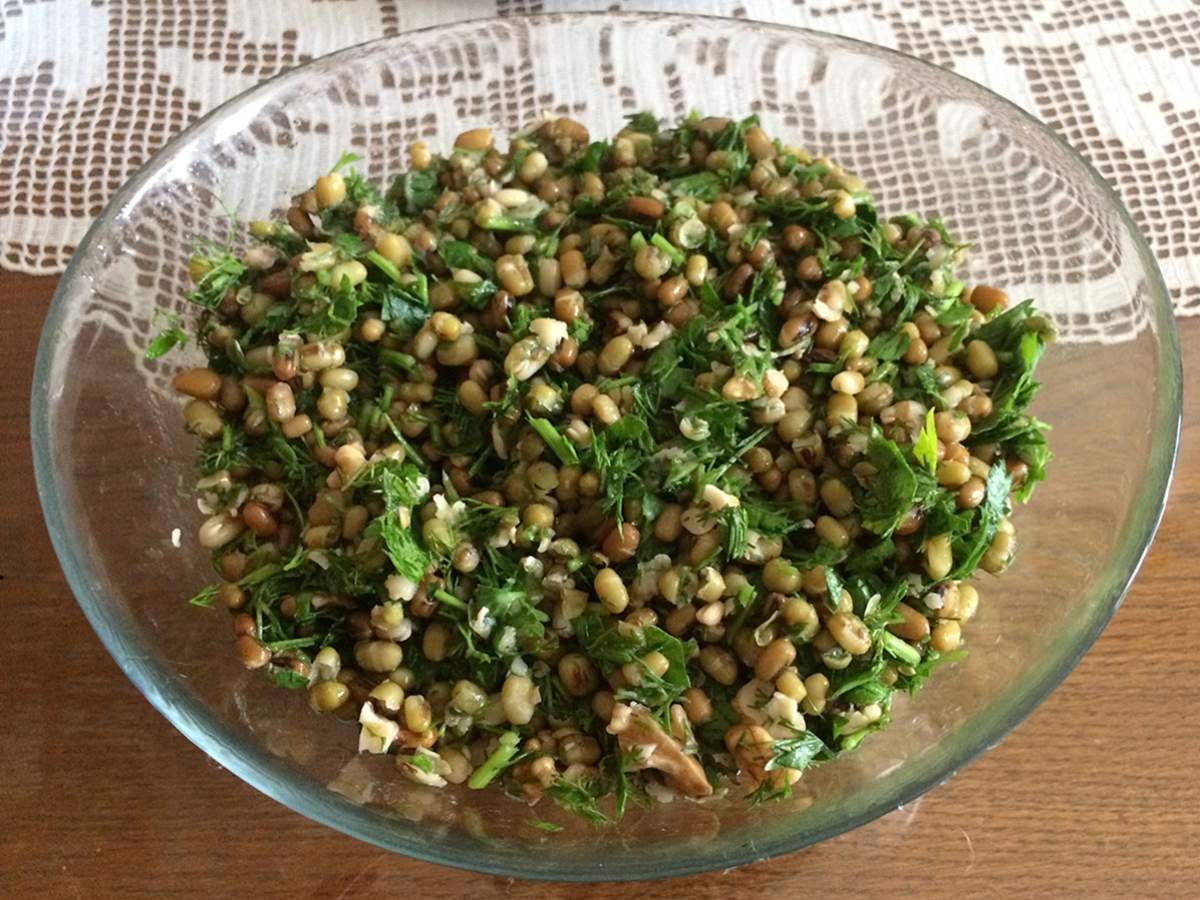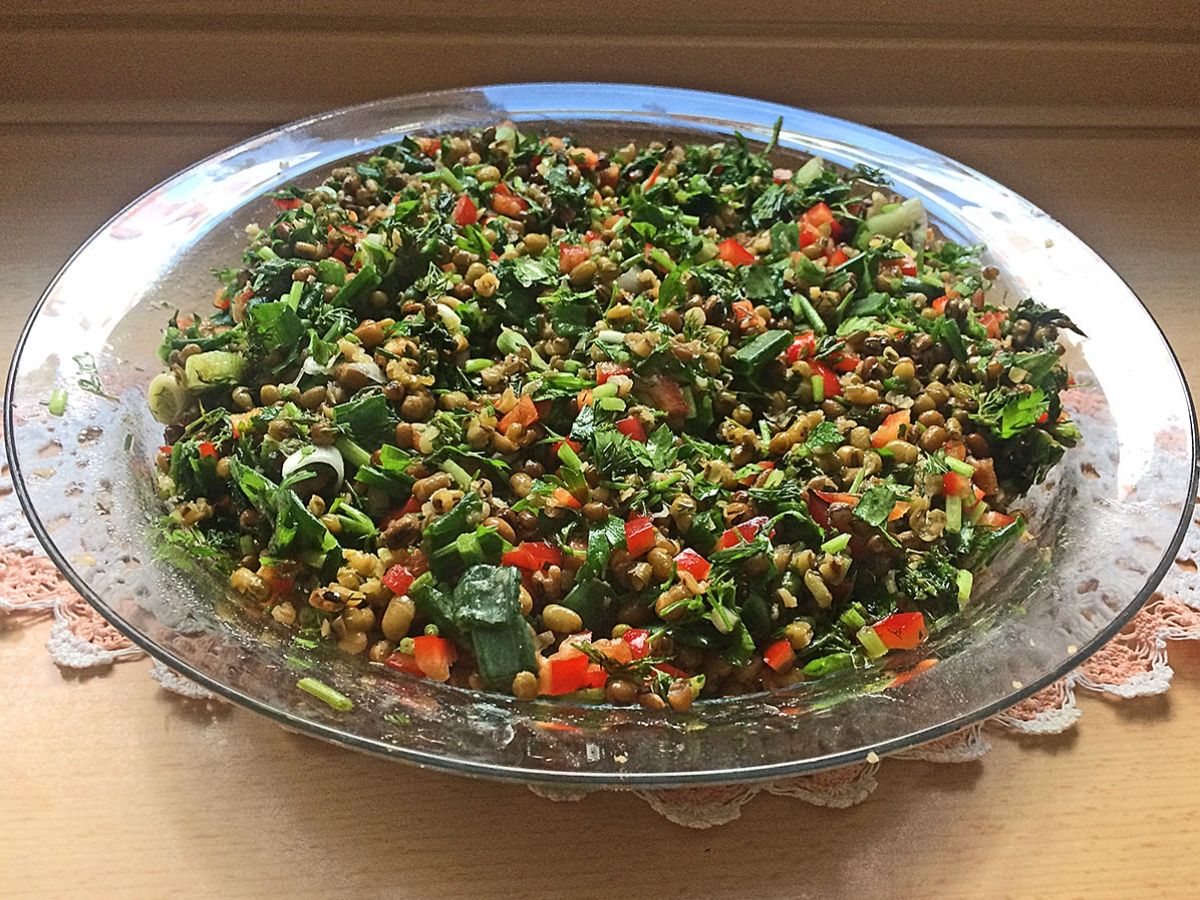

Ingredients for Mung Bean Salad
- 2 water glasses (about 200 ml / 3/4 cup + 1 tbsp each) mung beans
- 4 green onions
- 1 red pepper
- Half a bunch of parsley
- 1 tea glass (about 100 ml / 1/3 cup + 1 tbsp) vegetable oil
- 1 dessert spoon (about 2 tsp) pomegranate molasses
- Juice of half a lemon
- 1 dessert spoon (about 2 tsp) salt
- 1 teaspoon Aleppo pepper flakes
How to Make Mung Bean Salad
- Boil 2 water glasses of mung beans that have been soaked overnight for 20 minutes.
- Finely chop 4 green onions and 1 red pepper into a bowl. Chop half a bunch of parsley as well. After adding the mung beans, drizzle 1 tea glass of vegetable oil over the top. Add 1 dessert spoon of pomegranate molasses, the juice of half a lemon, 1 dessert spoon of salt, and 1 teaspoon of Aleppo pepper flakes, then mix everything together. Enjoy your meal…
About This Recipe
Mung beans, an indispensable staple of East Asian and Indian culinary traditions, have been cultivated as a food source by the people of India for thousands of years due to their delicious flavor.
What Are the Health Benefits of Mung Beans?
*By acting on LDL (bad cholesterol), they reduce the risk of developing deadly cardiovascular diseases such as heart attack and stroke, thus protecting heart health.
*Experts say that mung beans, due to their anti-hypertensive properties, can influence high concentrations of protein fragments, which means they can help lower high blood pressure.
*They not only prevent DNA damage but also eliminate dangerous cell mutations. Thanks to the high concentration of antioxidants they contain, they neutralize free radicals.
*With an amino acid content of around 20–24%, they are a complete protein powerhouse.
*Since they are high in protein and dietary fiber, they are known to aid weight loss by stimulating cholecystokinin, the satiety hormone.
*Rich in fiber, mung beans support the digestive system by helping to prevent constipation and irritable bowel syndrome.
*Mung beans are a food rich in soluble dietary fiber, making them ideal for reducing levels of bad cholesterol known as LDL.
*As they fall among low glycemic index foods, they support healthy blood sugar levels — making them diabetes-friendly.
*Vitamin A acts as an antioxidant agent to protect the cells of the eyes against free radicals.
*The enzyme lysine found in mung beans is helpful in the treatment of cold sores and wounds.
*They have benefits such as reducing asthma and allergic reactions.
*As a powerful anti-aging food, mung beans are rich in copper, which helps reduce the appearance of wrinkles, age spots, and fine lines.
It is worth reminding ourselves that we should incorporate this highly beneficial food into our lives more often. Today we prepared a Mung Bean Salad for you, and we absolutely loved it. We also can't help but mention that you should definitely try our Mung Bean Salad with Walnuts recipe sometime. We are sure you will love that one too. Bon appétit!