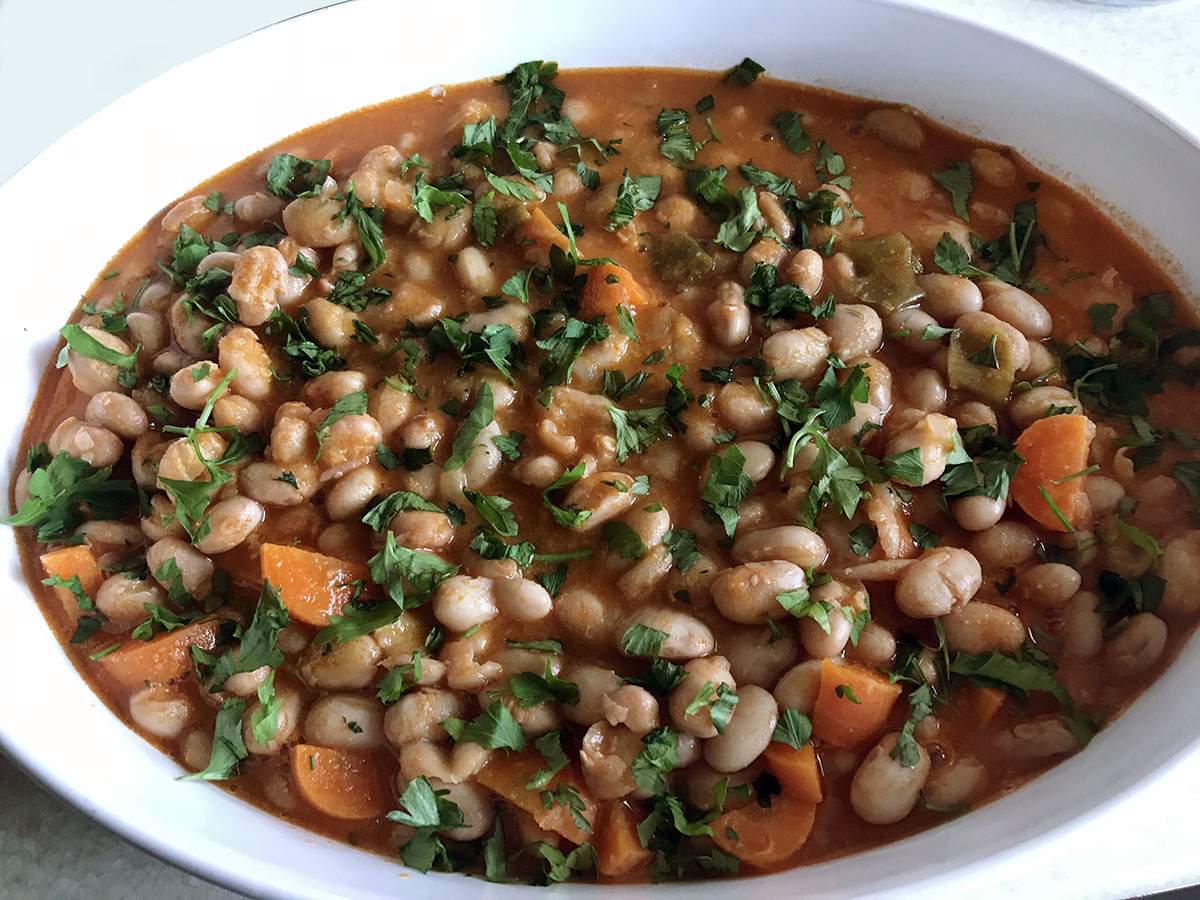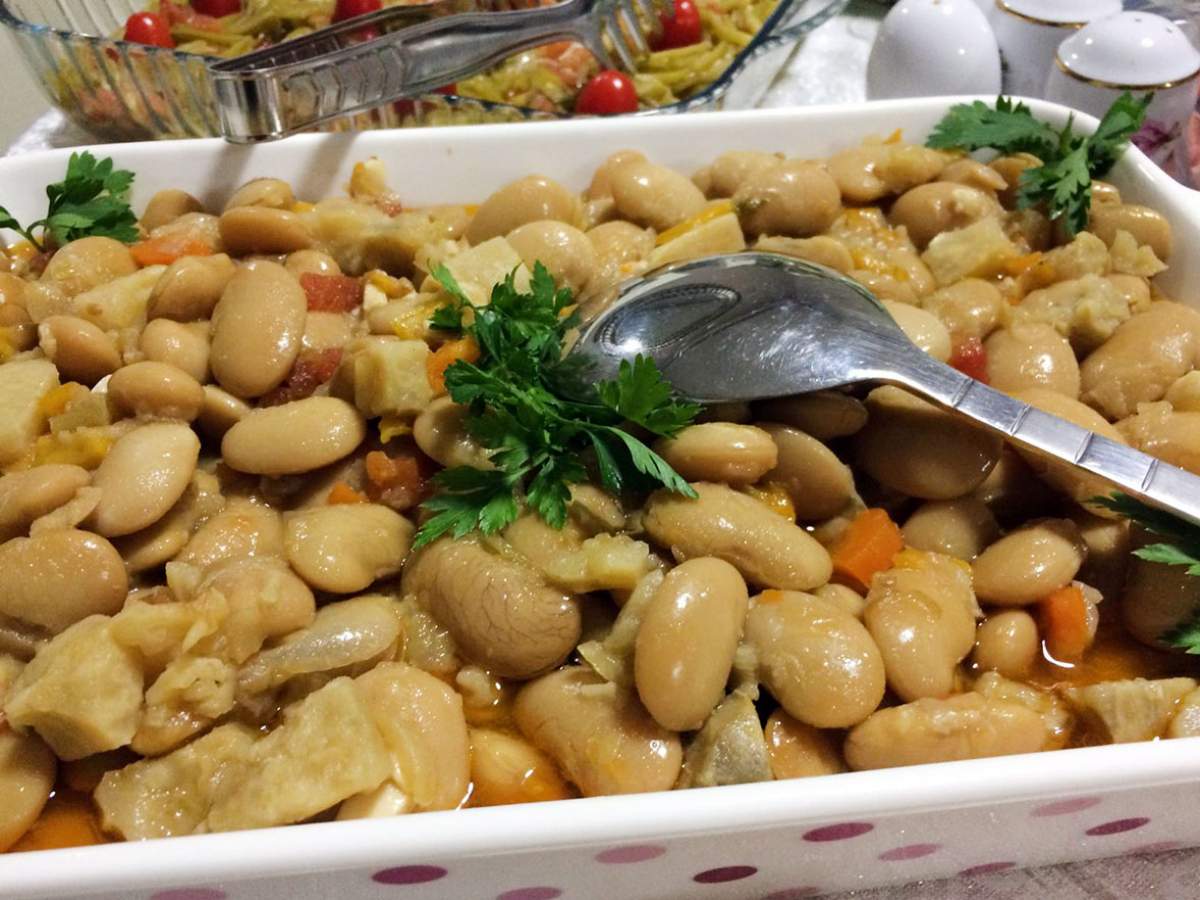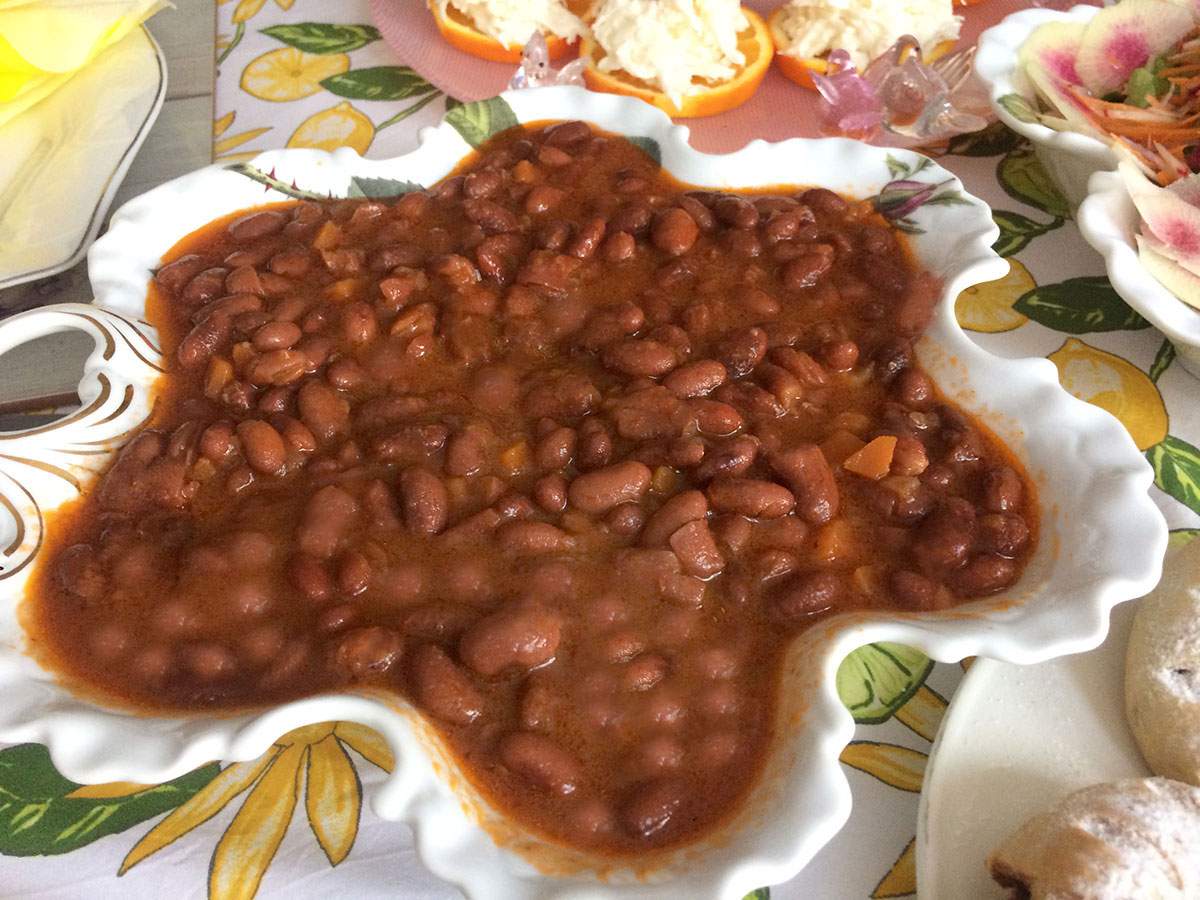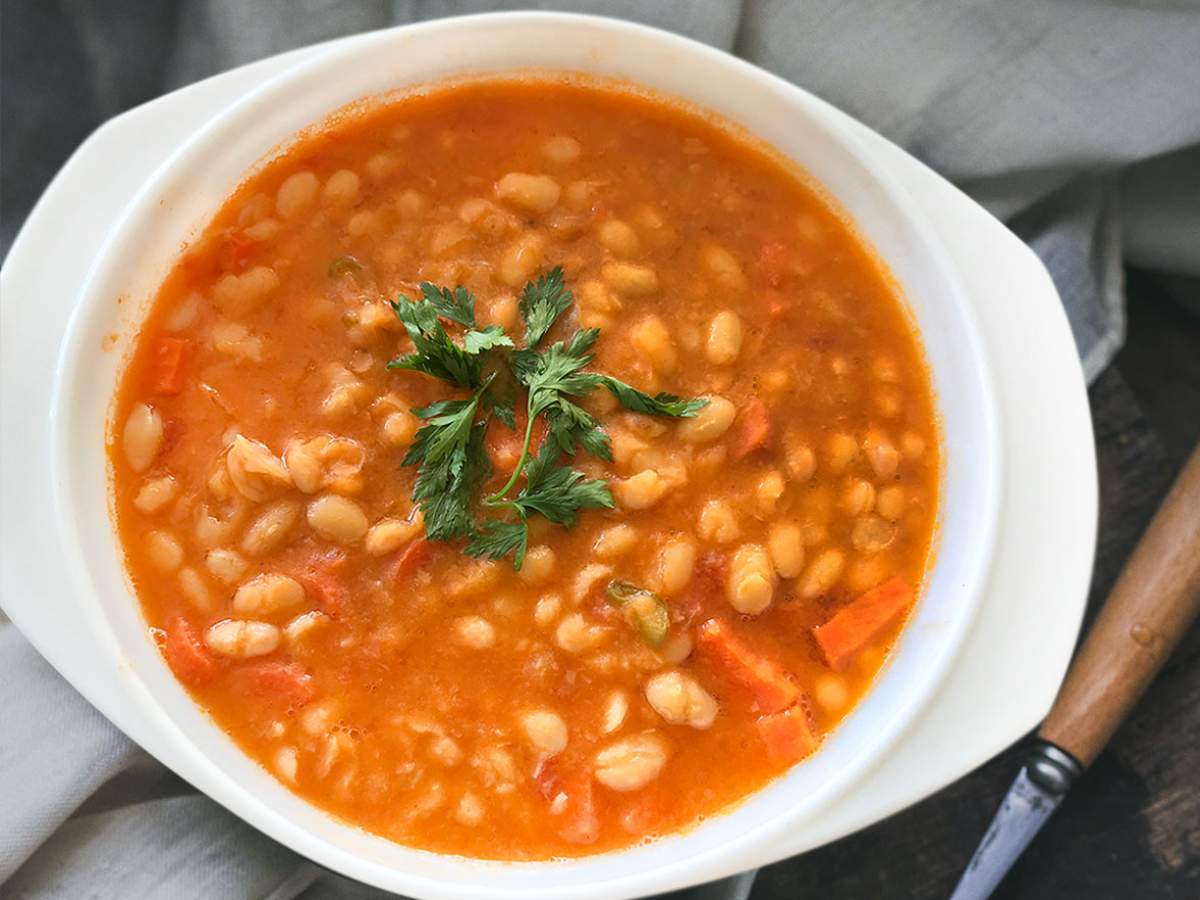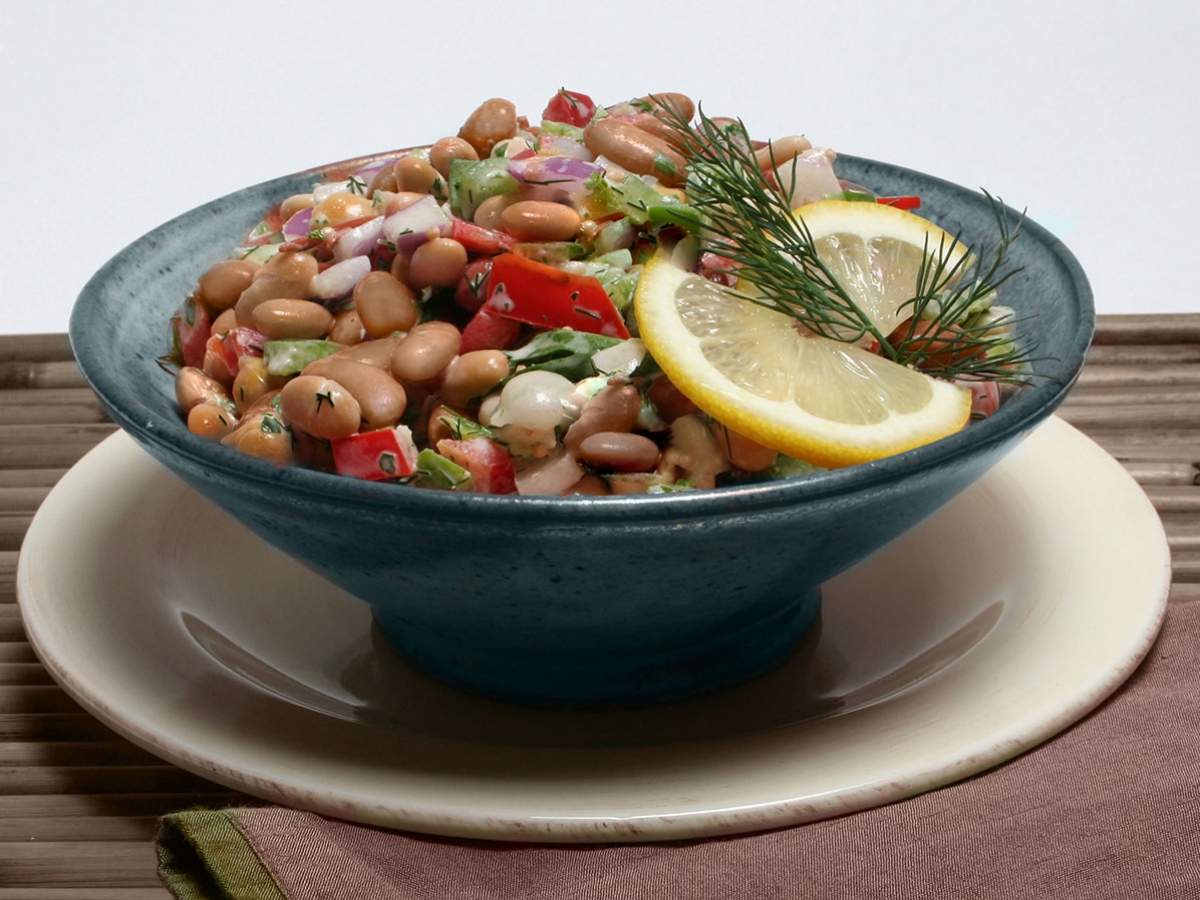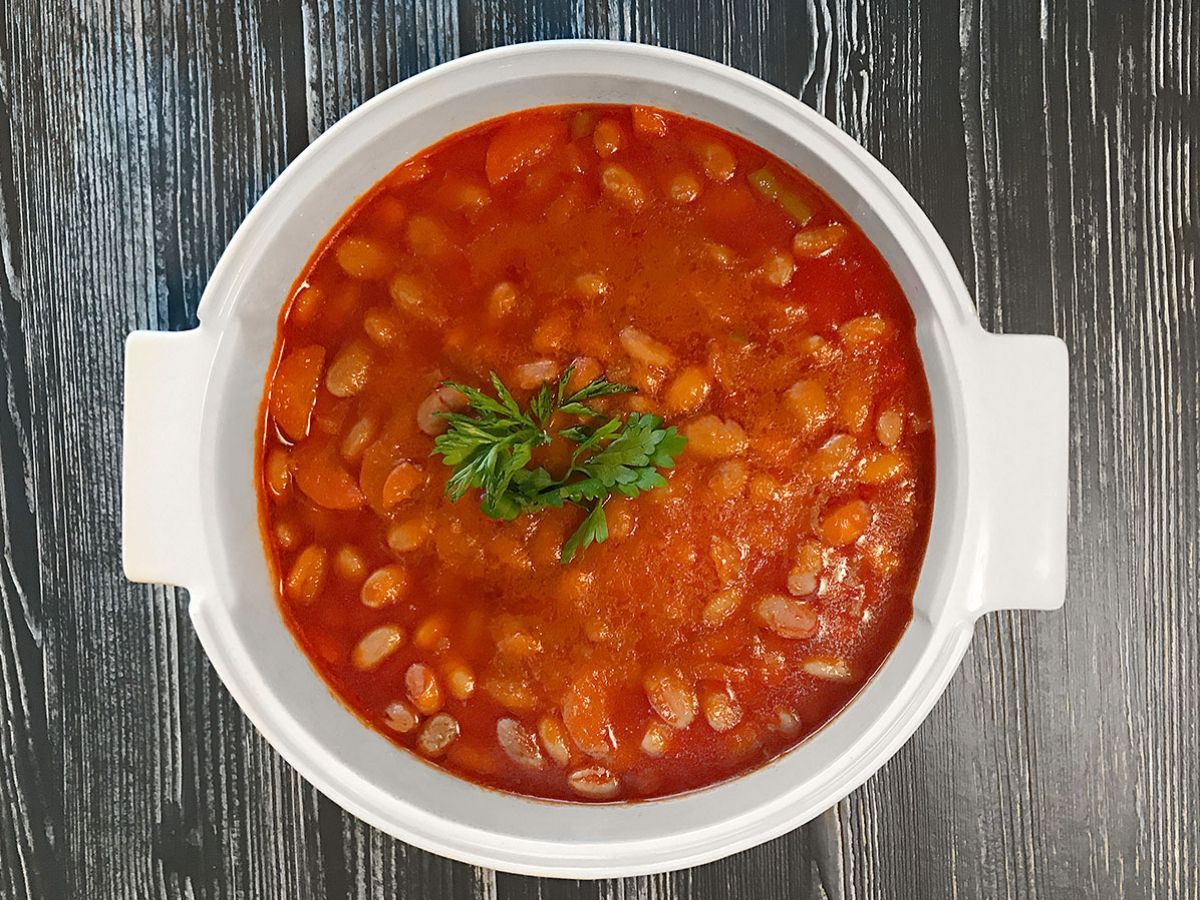

Ingredients for Borlotti Bean Pilaki (Pilaki)
- 500 g (about 1 lb) borlotti beans
- 1 onion
- 1 carrot
- 2 long green peppers
- 1 tablespoon salça (Turkish tomato/pepper paste)
- 1 dessert spoon (about 2 tsp) salt
How to Make Borlotti Bean Pilaki (Pilaki)
We rinse 500 g (about 1 lb) of borlotti beans and boil them in a pot for at least 10 minutes until the dark water is released, then drain. In a separate pot, we sauté 1 finely diced onion, 1 carrot, and 2 long green peppers in vegetable oil. We add 1 tablespoon of salça (Turkish tomato/pepper paste) and stir to combine. We add the borlotti beans, pour in enough water to just cover them, add 1 dessert spoon (about 2 tsp) of salt, and cook over low heat until it comes to a boil. Enjoy your meal…
Pro Tip
As is well known, cooking times for borlotti beans can vary depending on the variety. The time may be longer or shorter, so be sure to check the water level occasionally and add hot water as needed. One final tip: soak dried borlotti beans in water overnight before cooking.
Cooking Suggestion
Whether using dried or fresh borlotti beans, boiling them for 5 minutes first and discarding that water will prevent a dark appearance.
About This Recipe
Borlotti beans are a miracle of nature — they create a sense of fullness and provide our bodies with healthy carbohydrates.
Belonging to the legume family, borlotti beans have a pink-white shell color, most often tending toward white. This coloring sets them apart from regular beans. They are one of the indispensable cold dishes of Turkish cuisine, enjoyed frequently. Originally from Central America, borlotti beans spread across the entire world after the discovery of the Americas, becoming a powerhouse of protein. The earliest traces of the borlotti plant in Europe date back to the 16th century.
The benefits of this special plant are truly endless. Considering its benefits for bones, it should be an indispensable dish for children in their growing years. For healthy physical development, borlotti beans should be consumed at least once — and if possible, twice — a week. They help regulate blood sugar levels. They are beneficial for the kidneys and are even known to be effective in passing kidney stones. They provide the body with energy and relieve physical fatigue. They shorten the recovery process after poisoning incidents. Due to their high potassium and magnesium content, they are beneficial in preventing heart disease. As is well known, magnesium increases the flow of blood, oxygen, and nutrients in the body.
After listing these and many other magnificent benefits, we simply had to make a pilaki from this special plant, which is also packed with vitamin E, iron, protein, carbohydrates, zinc, and an abundance of fiber. Here is our recipe.