Little-Known Facts About Pomegranates
Pomegranates have symbolized abundance and fertility for thousands of years. Did you know that eating pomegranates is also believed to keep feelings of hatred at bay?
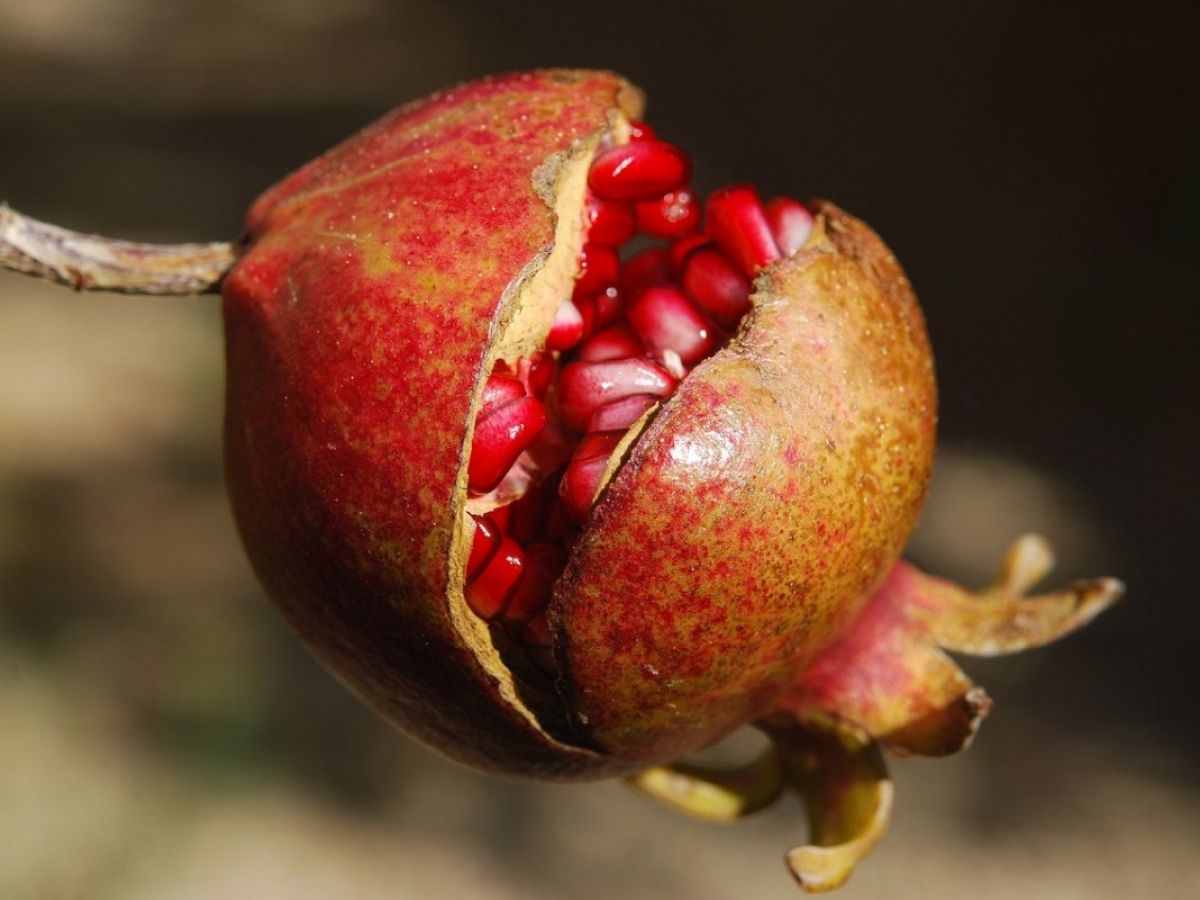

As we bid farewell to the lovely fruits of summer and feel the crisp breath of autumn deep in our bones, we have already begun welcoming the beautiful fruits of winter.
And the most beautiful and special among them is, without a doubt, the pomegranate!
Considered by ancient Egyptians to be the first fruit of the universe, the pomegranate — much like the olive and the grape — is recognized as one of the fruits that shaped our civilization, thanks to its unique qualities. Despite extensive research, it is not known exactly when humans first began eating pomegranates. Carbon-14 dating tests used for determining the age of organic materials have placed the existence of pomegranates as far back as 3000 BC. Research indicates that the earliest pomegranate-related finds were discovered at Hala Sultan Tekke in Cyprus. Later, references to the pomegranate tree appear in cuneiform inscriptions found in Mesopotamia.

Among the Hittites, one of Anatolia's oldest civilizations, the god of agriculture was depicted alongside wheat and pomegranates. In the Hittite language, the words "nurmu" or "nurma" meant pomegranate. While the new Hittite goddesses often held mirrors as symbols of femininity and beauty, other deities were shown holding pomegranates. In ancient Egypt, the dead were buried with pomegranates in the hope of a second life. A silver vessel in the shape of a pomegranate discovered in the tomb of Egyptian Pharaoh Tutankhamun has earned a notable place in history, as silver was rarely used in Egypt.
For thousands of years, the pomegranate has symbolized abundance and fertility across many cultures. In Greek mythology, for example, Hades, the god of the underworld, abducts Persephone, the daughter of Demeter, the goddess of fertility. After kidnapping the beautiful Persephone, with whom he fell in love at first sight, Hades offers her pomegranate seeds to ensure she can never return to the surface world. For every pomegranate seed Persephone eats, she must spend that many months in the underworld. Persephone eats 4 of the offered seeds and is thus forced to spend 4 months underground. Because Persephone spends 4 months in the underworld, Demeter, who is deeply devoted to her daughter, stops bestowing fertility upon the earth for those four months — and these four months correspond to the winter season. According to one belief, had Persephone eaten all 12 pomegranate seeds, the earth might have lost its fertility entirely, and perhaps none of us would exist today.
The pomegranate also holds great significance in Jewish faith. The Torah contains 613 commandments, and the pomegranate is said to contain 613 seeds to match. However, due to modern genetic modifications of pomegranates, 613 seeds are not always found today.
In Christianity, the pomegranate is also considered sacred. Depictions of the Virgin Mary and the Prophet Jesus holding a split pomegranate in church paintings symbolize the suffering of life and the concept of rebirth.
In Islam, the pomegranate is considered one of the fruits of Paradise and again symbolizes abundance and fertility. It is also believed that those who eat pomegranates will be kept away from evils such as grudges, hatred, and hostility.
The renowned Russian scientist Nikolai Vavilov wrote that the genetic center of the pomegranate is Iran, from where it spread to the warm regions of Asia and India. It is thought that the Phoenicians played a role in spreading the pomegranate to the Mediterranean, where it is widely cultivated today. The Silk Road also played a major role in distributing the fruit. The pomegranate, which can be preserved for a long time without spoiling, was able to reach China and other Far Eastern countries via the caravans that traveled the Silk Road.

Native to the Middle East and the Caucasus, the pomegranate is known as a tropical and subtropical climate fruit. Global pomegranate production is approximately 1 million tons, with the largest producers being Iran, Pakistan, Turkey, Azerbaijan, India, and Spain. The leading pomegranate-exporting countries are Iran, Turkey, Spain, India, and Tunisia, while the top importers are Russia, the United States, Germany, the Netherlands, and Ukraine. Turkey's pomegranate production increases significantly each year. In line with its climate requirements, pomegranates are grown in the Mediterranean, Aegean, and Southeastern Anatolia regions. Turkey's major pomegranate-producing cities include Antalya, İçel, Aydın, Denizli, Hatay, and Siirt. The most widely produced pomegranate variety in Turkey is Hicaznar. With its deep red hard rind, dark red seeds, and tangy flavor, it has won the admiration of European markets — and as a result, our exports grow year by year.
Known for its antioxidant properties and ability to boost fertility, the pomegranate has been the subject of numerous scientific studies both in ancient times and today. Beyond carbohydrates, pomegranates contain significant amounts of minerals and vitamins. The primary minerals include calcium, phosphorus, sodium, potassium, magnesium, iron, and zinc, while the vitamins present include A, B1, B2, B3, B6, and C. Thanks to these properties, the pomegranate has earned a place among functional foods. It is known to help lower blood pressure — especially in patients with hypertension — and to play a role in preventing cancer and cardiovascular disease. The pomegranate is also an important raw material for the pharmaceutical industry as a medicinal plant. Due to its high tannin content, it acts as an effective vasoconstrictor. For this reason, pomegranates can be used both internally and externally: internally to stop various types of bleeding, and externally to prevent various types of discharge. All parts of the pomegranate have antibacterial and antiviral properties — which is precisely why it was used in the past to treat diseases such as colic and dysentery. Recent scientific studies have also proven the therapeutic properties of pomegranate juice in cases of prostate cancer, diabetes, lymphoma, and the common cold.

Having outlined the medicinal properties of the pomegranate, let us also highlight the many ways it has been used from ancient times to the present. The pomegranate is one of the most important dye plants in Turkey. This is because different colors can be obtained from its roots, trunk, flowers, and fruit. For example, a bright red dye is obtained from pomegranate flowers and the rinds of unripe fruit. A beautiful and strong yellow is derived from its dried rinds. In Central Asia, pomegranates are used to dye leather yellow. A deep black color is obtained from the bark of pomegranate roots — a dye that was used as ink during the medieval period. Beyond its use as a dye, another notable quality of the pomegranate is that its wood is extremely durable and flexible. Thanks to its strength, it was used in the manufacture of various agricultural tools in earlier times.
During these glorious autumn months, you can consume plenty of locally grown pomegranates instead of greenhouse-grown or imported fruit. You can even use the rinds of the pomegranates you eat to dye your clothing, or soak the peeled rinds in a glass of vinegar for a week to make a quality ink.
Today, thanks to the pomegranate, we have set sail on a sea full of knowledge — and with this most magnificent of fruits, the Hicaznar, we send you our wishes for abundance and prosperity…