
Ingredients for Pistachio Mussel Baklava
- For the dough:
- 50 g room-temperature vegetable margarine
- Half a tea glass (about 50 ml / 3 tbsp + 1 tsp) vegetable oil
- 1 tea glass (about 100 ml / 1/3 cup + 1 tbsp) water
- 1 egg
- 2 tablespoons grape vinegar
- 2 tablespoons yogurt
- 4 water glasses (about 800 ml / 3 1/3 cups) flour
- Cornstarch for rolling
- For the filling:
- 2.5 water glasses (about 500 ml / 2 cups + 2 tbsp) milk
- Half a tea glass (about 50 ml / 3 tbsp + 1 tsp) semolina
- Half a water glass (about 100 ml / 1/3 cup + 1 tbsp) ground pistachios
- For the top:
- 250 g (about 9 oz) butter
- 1 tea glass (about 100 ml / 1/3 cup + 1 tbsp) vegetable oil
- For the syrup:
- 3 water glasses (about 600 ml / 2 1/2 cups) water
- 3 water glasses (about 600 ml / 2 1/2 cups) granulated sugar
- 3–4 drops lemon juice
How to Make Pistachio Mussel Baklava
In a large bowl, combine 50 g room-temperature vegetable margarine, half a tea glass of vegetable oil, 1 tea glass of water, 1 egg, 2 tablespoons of grape vinegar, and 2 tablespoons of yogurt. Mix well by hand. Add the flour gradually — 4 water glasses total — and knead until you have a smooth dough that doesn't stick to your hands. Divide the dough into equal portions and roll each one to roughly the size of a small cup using cornstarch (not flour — flour makes the dough tough). Layer the 8 rolled rounds between cut-open ziplock bags to prevent sticking, place in a container, and refrigerate for 1 hour.
While the dough chills, make the filling. This is a simple muhallebi — a Turkish milk pudding base. Pour 2.5 water glasses of milk and half a tea glass of semolina into a saucepan. Cook over medium heat, whisking constantly, until thickened. Remove from the heat and let it cool completely. Once cool, stir in half a water glass of ground pistachios with a spatula. Transfer the filling to a piping bag.
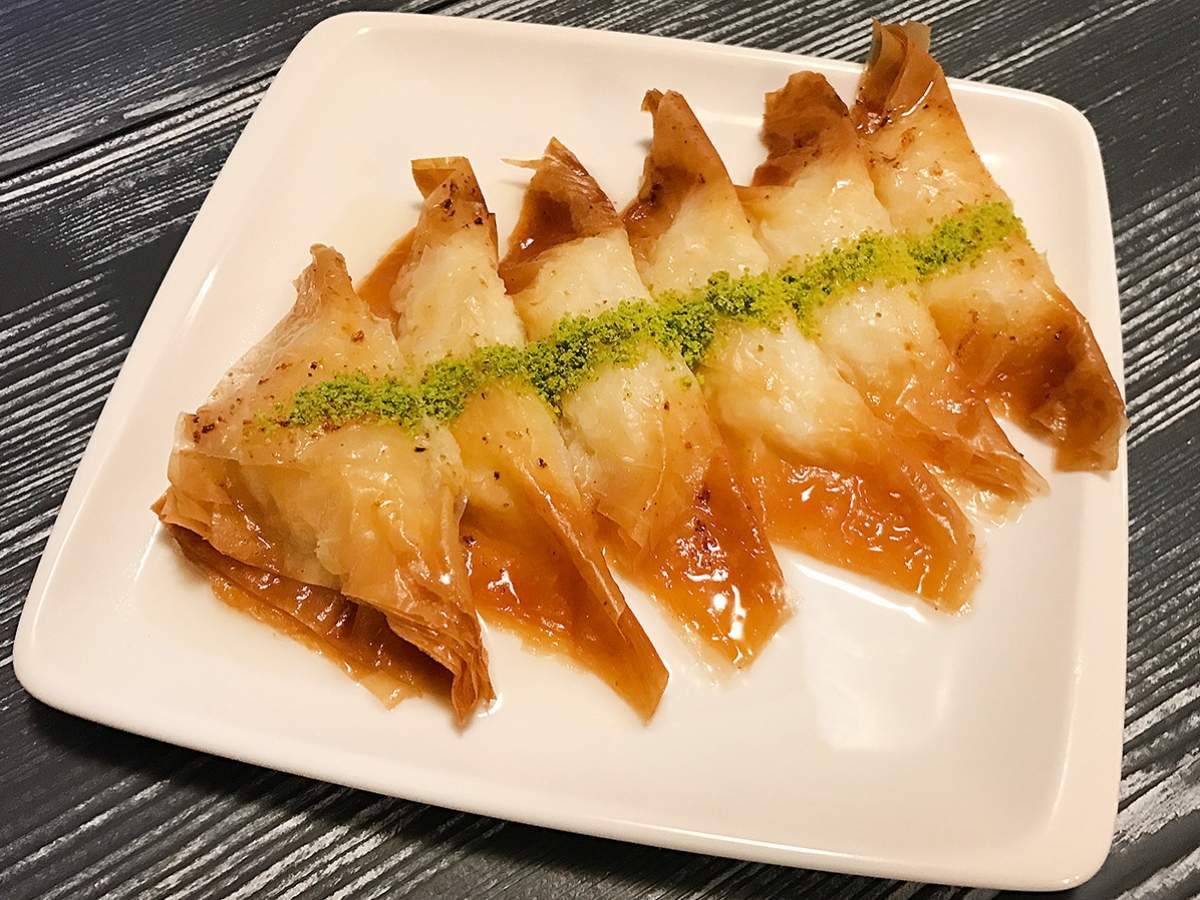
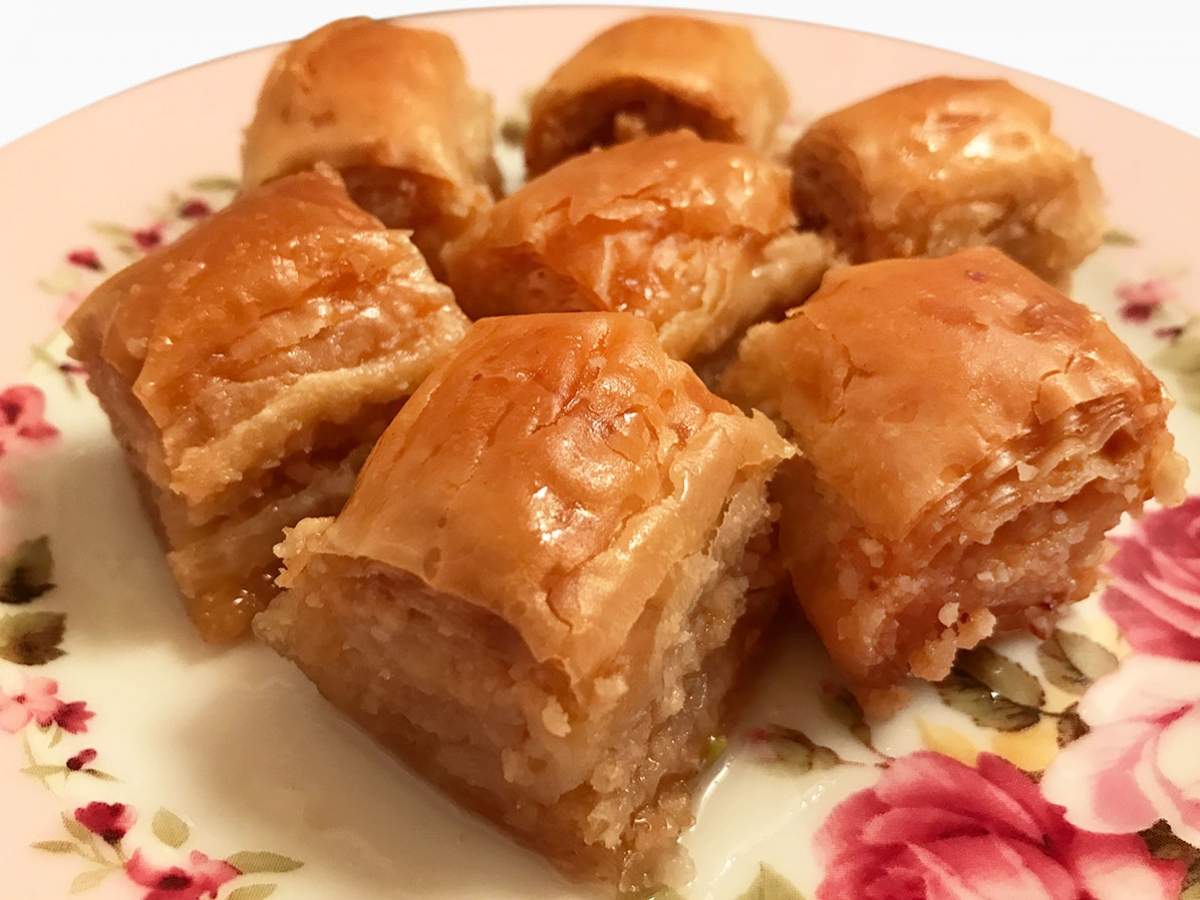
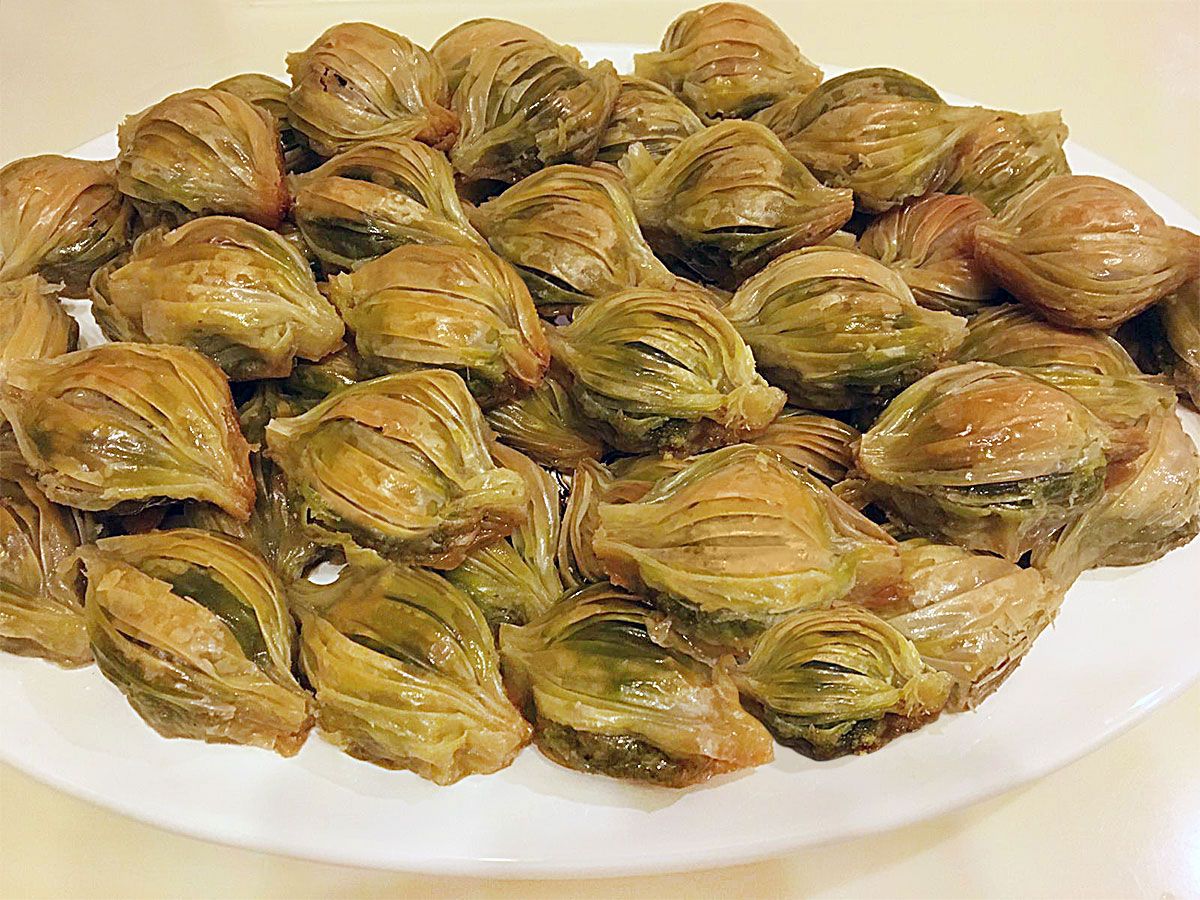
Take the chilled dough portions and roll them out paper-thin using cornstarch. Wrap each sheet loosely around a rolling pin and scrunch it together with your hands along the pin, then slide it off and open it back out — this creates the crinkled texture. Cut each crinkled sheet lengthwise down the middle. Gather the crinkled long strip slightly toward the center, leaving a border on each side. Pipe walnut-sized portions of filling at two-finger intervals along the strip. Fold the two long edges over the filling so they overlap, then press the middle to seal. Cut between each mound of filling with a knife. Pinch the cut ends shut, flip each piece over, and press to secure the shape. Arrange the formed baklava on a baking tray. Melt 250 g butter with 1 tea glass of vegetable oil in a small saucepan and spoon it evenly over the tray. Bake at 190°C (375°F) until golden.
While the baklava bakes, make the syrup. Combine 3 water glasses of water and 3 water glasses of granulated sugar in a saucepan, add 3–4 drops of lemon juice, and bring to a boil over medium heat. Simmer until slightly thickened. Pour the hot syrup over the baklava as soon as it comes out of the oven. Let the syrup absorb fully and the baklava cool completely before serving.