A 10-Step Guide to Using Your Refrigerator the Right Way
Your refrigerator may not be brand new or "smart," but you can learn to use it smartly. Proper use is essential for food safety, longer appliance life, and a healthier kitchen. So what does smart refrigerator use actually look like?

Prof. Dr. Y. Birol Saygı, Head of the Gastronomy and Culinary Arts Department at Beykoz University, explains: "Smart refrigerator use means keeping the refrigerator temperature within the recommended range, organizing your food properly inside, and keeping it clean. With consistent monitoring, cleaning, and maintenance, your refrigerator will do its job fully and serve your healthy kitchen. Otherwise, it can harm both your nutrition quality and your budget."
The refrigerator is one of the most important home appliances that makes our lives easier… New models with different features hit the market every day. The ones we pay the most for are the technologically advanced products known as 'smart refrigerators' — they self-regulate their temperature, humidity, and energy. Even if yours isn't the latest model or a smart one, you can still learn to use your trusty old refrigerator smartly. In fact, learning to use your refrigerator smartly and correctly is essential for keeping your food healthy and extending the life of the appliance!
What is smart refrigerator use?

The danger zone inside your refrigerator!
Prof. Dr. Y. Birol Saygı, Head of the Gastronomy and Culinary Arts Department at Beykoz University, sums up the answer to this question: "Smart refrigerator use means keeping the refrigerator temperature within the recommended range, organizing your food properly inside, and keeping it clean." According to information provided by Saygı, the temperature range between 5°C and 57°C (41°F and 135°F) is considered the "danger zone" for our food. Within this temperature range, bacteria on food can multiply to levels capable of making people ill. For this reason, properly cooling food in the refrigerator slows bacterial growth and keeps food safe. Food that is properly cooled prevents the growth of microorganisms such as Salmonella and E. coli, which cause food poisoning.
Cleaning and maintenance matter
Prof. Dr. Birol Saygı emphasizes that the refrigerator's user manual must be read to understand how to configure settings and learn about its features. Noting that refrigerators account for 25% of the electrical energy used in kitchens, Saygı states: "As the refrigerator ages and storage and placement mistakes accumulate, energy consumption increases. Refrigerators play a very important role in healthy living, and they can harm us — both in terms of our nutrition quality and their high operating cost — without us even noticing. That's why consistent monitoring, cleaning, and maintenance will allow your refrigerator to do its job fully and serve your healthy kitchen."

Key criteria for choosing a refrigerator
When choosing a refrigerator, the main selection criteria are: price, size, the number of people who will use it, color, whether it has a freezer or not, ease of cleaning, features, energy efficiency, defrost system, brand, and warranty/service. Proper maintenance is important for extending the life of a refrigerator… Saygı highlights the following points on this topic: "Even if a refrigerator receives regular preventive maintenance, it is time to call a service technician for help when: food and drinks are not as cold as they should be, frozen products are soft, melted ice cubes are present or cubes are sticking together, food is spoiling prematurely, or any unusual noises are noticed. Even without these signs, routine maintenance should still be carried out. Proper maintenance helps minimize wear and tear on the appliance and will extend the refrigerator's useful life."
Stack the shelves smartly
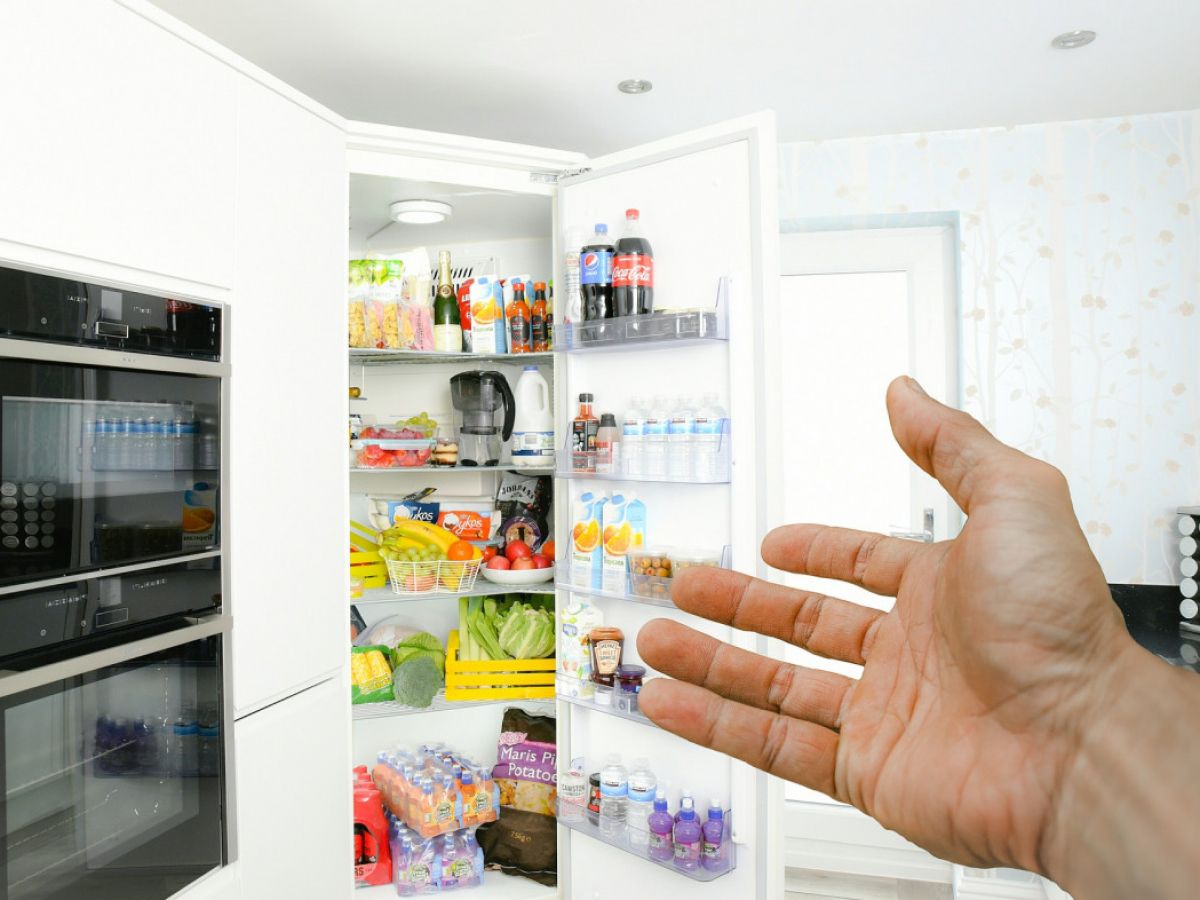
When used smartly, refrigerators help us keep food fresh for longer. However, this does not mean you can keep food in the refrigerator indefinitely. To keep food fresh and safe for human health, attention must be paid to many factors — from keeping the appliance clean to how food is arranged inside. Refrigerators where food is placed correctly become more efficient at cooling, while grocery shopping can be reduced, contributing to the family budget. Prof. Dr. Y. Birol Saygı draws attention to the importance of stacking shelves wisely. Noting that products such as meat, vegetables, and fruit should be stored in separate drawers and on separate shelves, Saygı provides the following information: "The most suitable storage arrangement based on the temperature distribution inside the refrigerator is: ready-to-eat foods, meals, dairy products, cooked items, and prepared salads on the upper and middle shelves; portioned meat and meat products (ground meat, köfte (Turkish meatballs)) and portioned fish and fish products on the bottom shelf; fruits and vegetables in the crisper drawers; and eggs and packaged products on the door shelves. High-risk foods such as raw meat, poultry, and fish, if placed on upper shelves, can drip and contaminate other foods with microorganisms. For this reason, foods with potential for microorganism contamination should be stored in plastic bags or sealed containers on the lowest shelf of the refrigerator. The drawers in your refrigerator are designed to create a humidity-controlled zone for storing fruits and vegetables. However, if too much moisture is noticed building up, the drawer should be left slightly open to reduce the humidity level."

Leave one third empty
Overfilling the refrigerator is not a good practice. Saygı says the ideal is to keep 30% of the refrigerator empty. Saygı states: "It is important for efficiency that only 70% of the refrigerator is full. The refrigerator should not be overfilled, and enough space should be left between foods. Overfilling the refrigerator can block cold air from circulating freely, and the refrigerator may not cool food properly. Otherwise, the refrigerator can warm up. This leads to a decline in the nutritional and sensory quality of your food, which in turn increases the likelihood of buying more."
A 10-step guide to using your refrigerator the right way
1.) Place it in the right spot: The refrigerator should be positioned as far as possible from the stove, oven, or any heat source in the kitchen. If a refrigerator is close to any of these heat-generating points, it has to work harder to keep its contents cold, consuming more energy in the process. Also, make sure there is sufficient space around the refrigerator so that the gaps on the back and side surfaces — i.e., the vents — can function properly.
2.) Measure the temperature with a thermometer: The temperature of both the refrigerator and freezer compartments should be checked frequently. This is important for food safety and to help the refrigerator operate efficiently. The refrigerator compartment should be set to 5°C (41°F) or below, and the freezer compartment to -18°C (0°F). The best way to regularly check the refrigerator's temperature is to use a thermometer.
3.) Don't leave the doors open for too long: Deciding what to take out before opening the refrigerator door shortens the amount of time the door stays open. Opening the door and then deciding causes the door to remain open longer, which can raise or fluctuate the refrigerator's temperature. When the power goes out, keeping the doors closed means the internal temperature of the refrigerator is preserved for longer.

4.) Keep food covered: To make use of the full depth of your refrigerator, use tall, flat, lidded containers that can be stacked in order of height. Glass is best for visibility, hygiene, and sustainability; use containers with tight-fitting lids. Food should be stored tightly covered with foil or plastic wrap in containers that can be safely stacked on top of one another. This helps minimize moisture inside the unit, reducing frost build-up in the refrigerator. The relative humidity (RH) inside the refrigerator is 55–60%, and because our food has a high moisture content, food loses moisture in order to reach humidity equilibrium. This leads to frosting in the refrigerator while also causing food to lose moisture and decline in quality. Also, let meals cool down before placing them in the refrigerator. Putting hot food in the refrigerator raises the temperature of both the appliance and its contents, making the appliance work harder to rebalance.
5.) Check the door seals: If the seal is not closing properly, cold air can escape, causing the unit to work harder and consume more energy to maintain the correct temperature. Door seals should be checked periodically. If there is any opening, compression, cracking, or tearing in the seals, they should be replaced. As part of your refrigerator maintenance routine, make sure the seal is regularly cleaned with warm soapy water.
6.) Follow the first-in, first-out rule: Labels on products to be stored in the refrigerator must always be read and the instructions on the packaging followed. Food that may have accidentally or inadvertently been left in the refrigerator too long should be discarded. If mold is visible on food, if there is an off odor or other signs of spoilage, or if you simply suspect it has gone bad, it should definitely not be consumed. When storing your food, it is important to follow the first-in, first-out rule. It is easier to place newly brought food behind older food already in the refrigerator. Also be careful not to leave food at room temperature for more than two hours after it has been taken out of the refrigerator.
7.) Organize your shelves: Smart stacking of shelves in the refrigerator is very important. The most suitable storage arrangement based on the temperature distribution inside the refrigerator is: ready-to-eat foods, meals, dairy products, cooked items, and prepared salads on the upper and middle shelves; portioned meat and meat products (ground meat, köfte (Turkish meatballs)) and portioned fish and fish products on the bottom shelf; fruits and vegetables in the crisper drawers; and eggs and packaged products on the door shelves. High-risk foods such as raw meat, poultry, and fish carry the risk of contaminating other foods with microorganisms and should therefore be stored on the lowest shelves of the refrigerator in plastic bags or sealed containers. Fruits and vegetables breathe in order to sustain themselves, and as a result of this respiration, they produce ethylene gas. Ethylene accelerates the aging of fruits and vegetables. For this reason, fruits and vegetables should be stored in separate drawers.

8.) Deal with odors: The best way to combat odors in the refrigerator is to use well-sealed glass containers. To get rid of odors, you can keep an open container of baking soda on the bottom shelf, or sprinkle a little baking soda under your vegetable drawer and cover it with a paper towel. Remember to change the baking soda every three months. If food has spoiled in the refrigerator — especially during a power outage — and the smell from the food lingers, it can be difficult to remove. In such a case, the inside of the refrigerator should be wiped down with vinegar and water. Vinegar provides the acid that kills mold. It should also be washed with baking soda and water. Make sure to scrub the seals, shelves, sides, and especially the door. Allowing the refrigerator to air out for a few days after cleaning can also be helpful. Fresh ground coffee or baking soda can be sprinkled or placed in an open container at the bottom of the unit. You can also place a cotton swab dipped in vanilla inside the freezer, close the door, and leave it for 24 hours.
9.) Keep the refrigerator level: If the refrigerator is not on a flat surface, the doors may not close completely or properly, and the motor may be strained unnecessarily. A spirit level should be used on the shelves to check the refrigerator's position. The refrigerator's feet should be adjusted to keep the unit level.
10.) Do a thorough cleaning: Any spills or drips inside the refrigerator should be cleaned up immediately. Every three months, removable parts such as shelves and drawers should be taken out and cleaned with warm water and a small amount of dish soap. It should be noted that the refrigerator should never be cleaned with bleach or chemicals that could damage food. If a deep clean is needed — particularly to remove stubborn stains — a toothbrush and a mixture of baking soda and water should be used. The outside, back, and bottom of the refrigerator should also be cleaned. Accumulated dirt and dust on the metal coil (condenser) at the back of the refrigerator and on the compressor underneath prevent the refrigerator from operating efficiently. If the unit's condenser is at the back, the unit needs to be moved away from the wall. This also provides an opportunity to clean the floor beneath the refrigerator. Cleaning can be done with a vacuum cleaner or a stiff brush. Condensers should be cleaned in this way once or twice a year. If you have pets, it is beneficial to clean more frequently. Additionally, ice in the refrigerator should be defrosted when it becomes thicker than 5 mm. Ice increases energy consumption by blocking heat transfer.