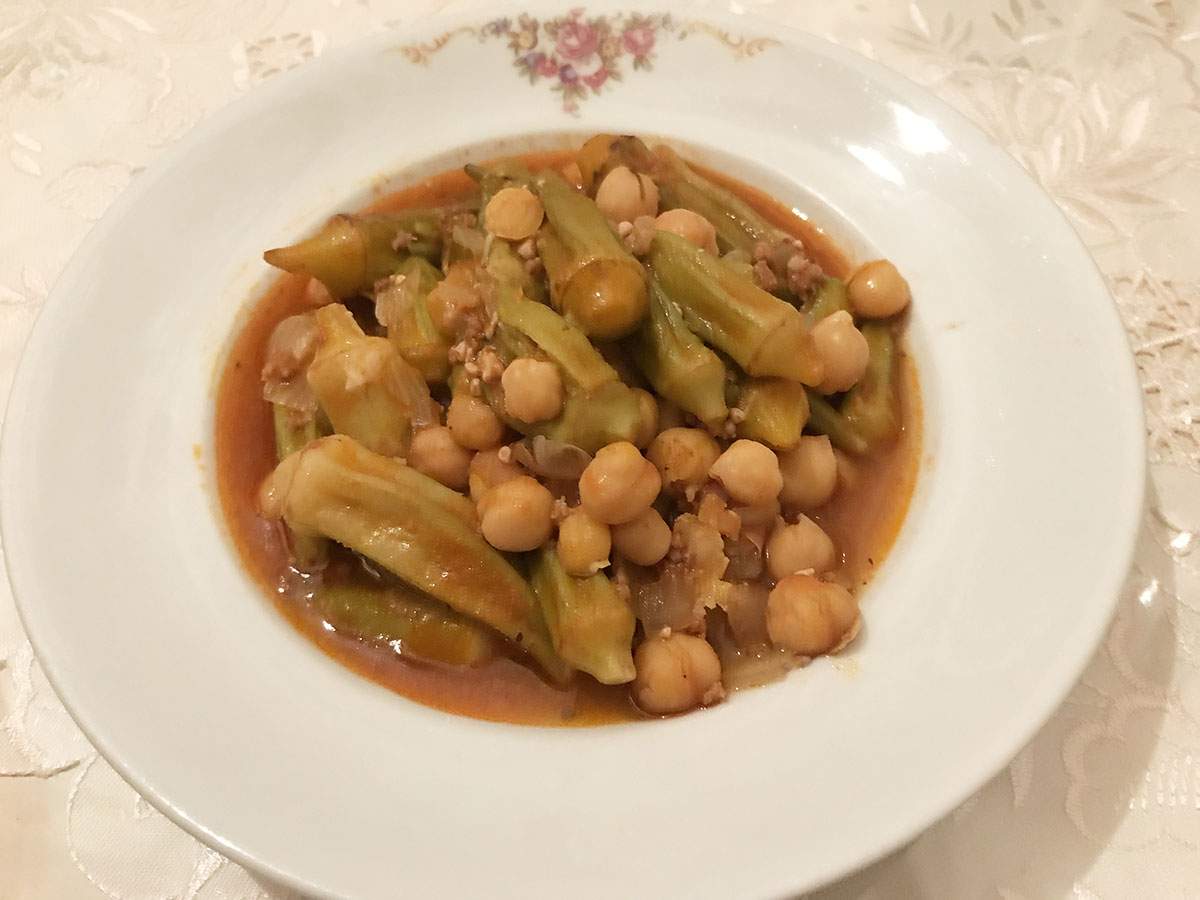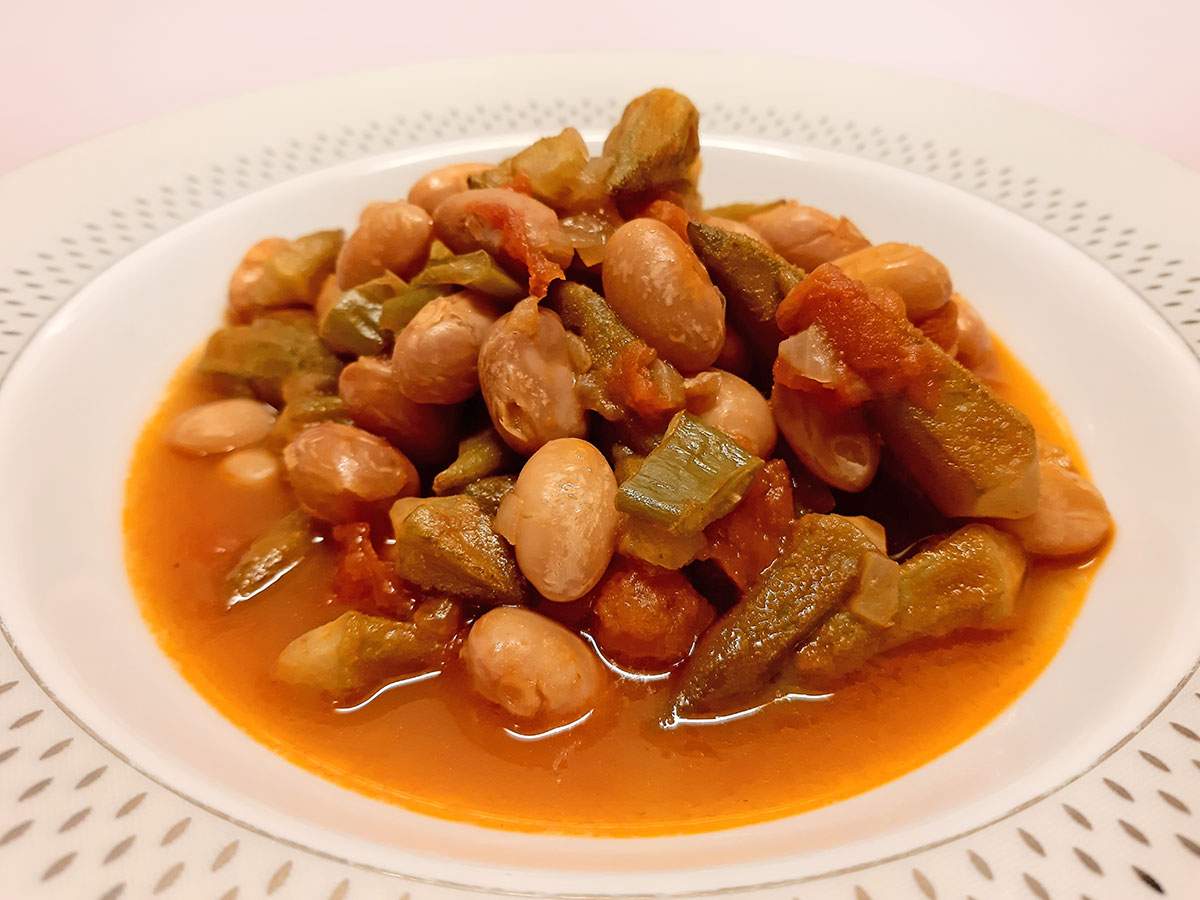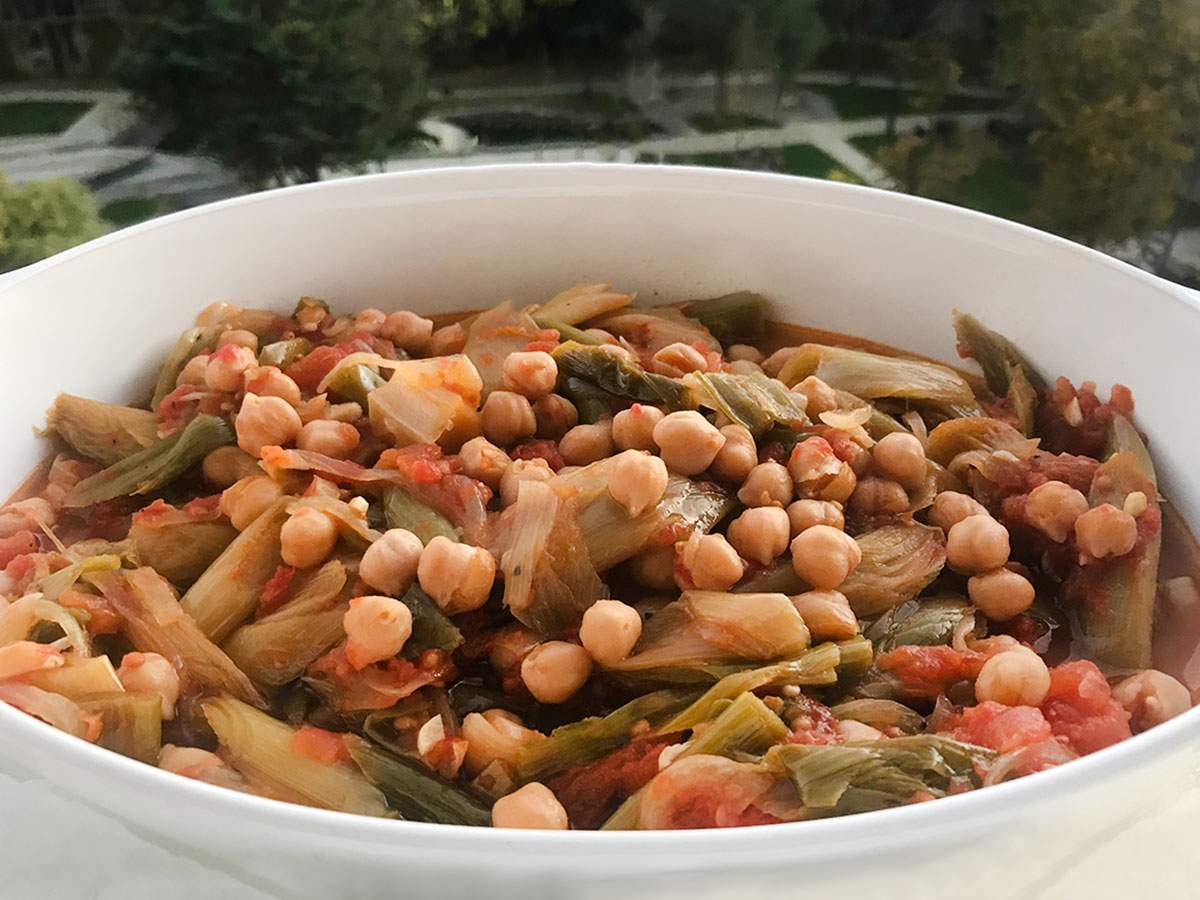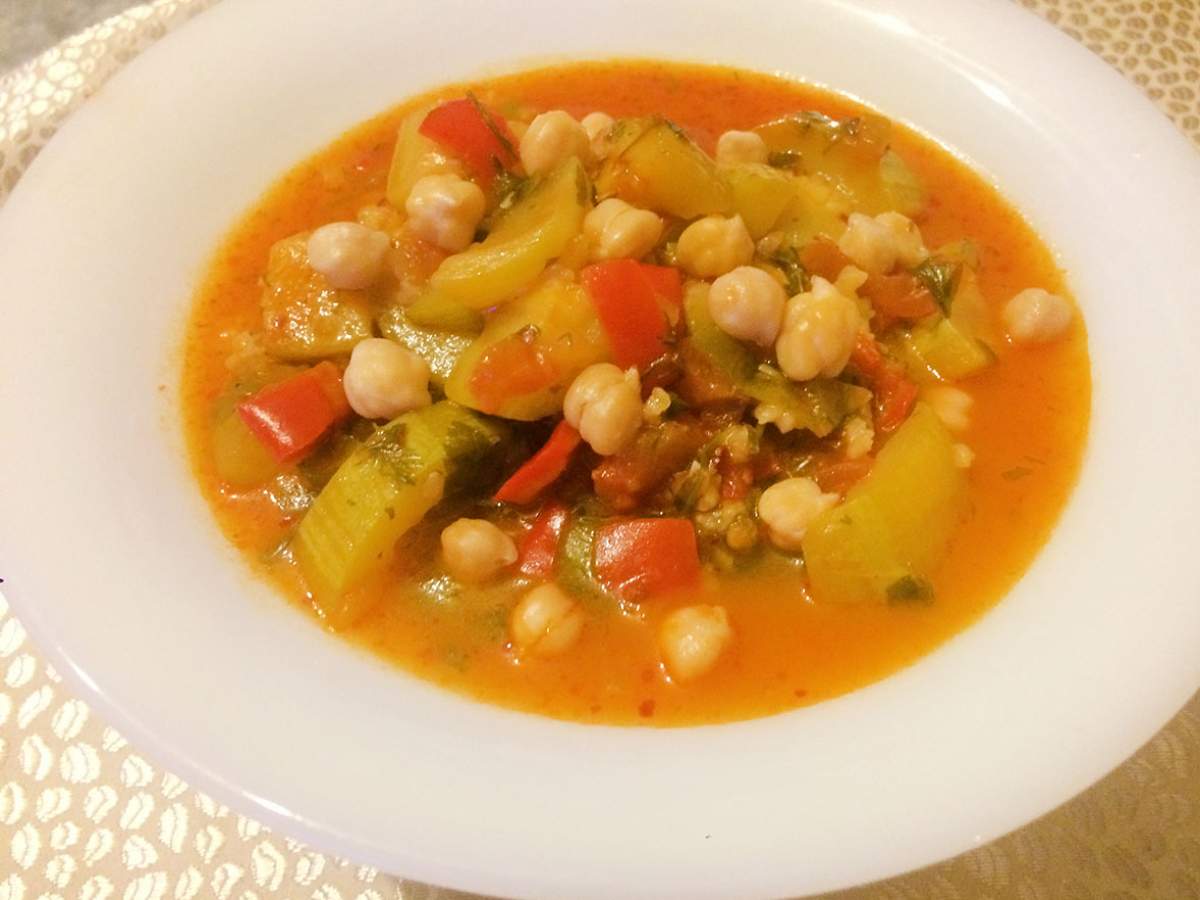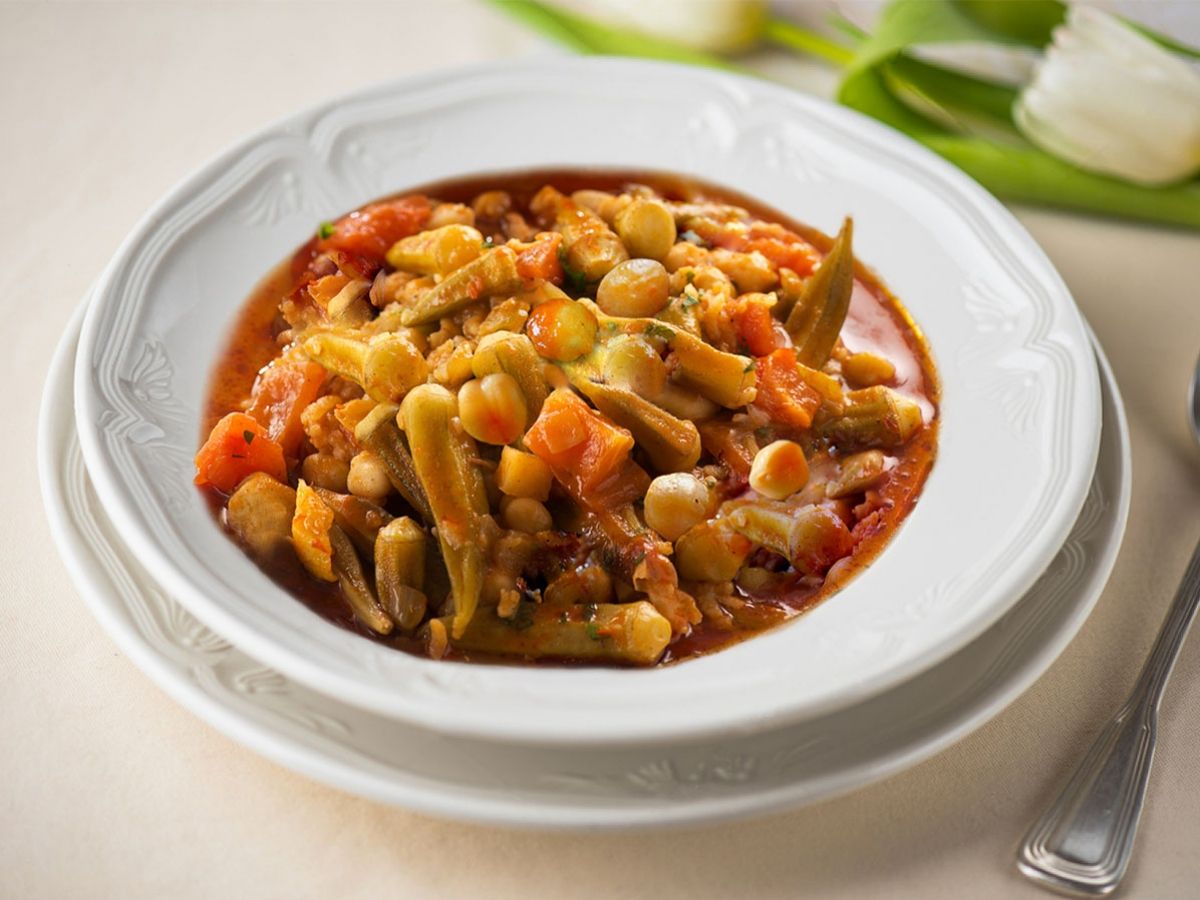

Ingredients for Okra with Chickpeas (Nohutlu Bamya)
- 500 g (about 1 lb) okra
- 1 water glass (about 200 ml / 3/4 cup + 1 tbsp) boiled chickpeas
- 3 tomatoes
- 2 long green peppers (sivri biber)
- 1 onion
- 1 tea glass (about 100 ml / 1/3 cup + 1 tbsp) vegetable oil
- Salt
- Half a lemon
How to Make Okra with Chickpeas (Nohutlu Bamya)
Sauté 1 onion and 2 long green peppers in 1 tea glass (about 100 ml / 1/3 cup + 1 tbsp) of vegetable oil until softened and lightly golden. Dice 3 tomatoes and add them in. Add the cleaned and washed okra, 1 water glass (about 200 ml / 3/4 cup + 1 tbsp) of boiled chickpeas, and salt, then pour in enough water to just cover. Squeeze in half a lemon. Once it comes to a boil, reduce the heat and let it cook on low. Enjoy your meal...
About This Recipe
The homeland of chickpeas is known to be the Southeast region of our country. According to some historical sources, chickpeas were cultivated in this region 7,000–7,500 years ago. In addition to being rich in starch and nitrogen, chickpeas are also a great source of plant-based protein, B vitamins, iron, calcium, phosphate, and phosphorus. The botanical names of the chickpea are Cicer arietinum, Chickpea, and Pois chiche — it belongs to the legume family. It has a deep taproot and is self-pollinating. Its fruits are swollen and oval in shape, pointed at the tip, and have small hairs at the end. Each fruit contains 1–3 seeds. The flower stalks carry the flowers, which can be white, pink, or blue in color. The seeds form inside pods known as "çakıldak" or "kapçık." Seed color varies and can be white, cream, yellowish, or brown.
Chickpeas are grouped into 2 main categories based on the size, shape, and color of their seeds. These are the "Desi" type and the "Kabuli" type. "Desi" means local in Hindi. This variety is generally short in stature, and anthocyanin typically forms in its stems and flowers. The flower color can sometimes be white, pink, purple, or blue. Its seeds are small and display the same variety of colors as the flowers — seeds can be yellow, brown, black, or greenish. Nearly 80% of world production consists of this type. They are widely cultivated in countries such as India, Ethiopia, Australia, Afghanistan, and Iran, which have adapted to semi-arid tropical climates. The Kabuli type, also known as the Spanish type, grows taller — around 1 meter (about 3 feet). Its flowers are white and do not produce anthocyanin. The seeds are very large and white or light cream in color. This variety has adapted to temperate climates.
How could we not make our Okra with Chickpeas recipe — a delicious dish — using our prepared Winter Okra? We hope you enjoy making it!